The Grapevine

CFP: Nineteenth-Century Studies Association Conference, Philadelphia, March 11-13, 2027

Framing the Human in the Nineteenth Century

48th Annual Conference

Nineteenth-Century Studies Association

Philadelphia, PA

March 11-13, 2027

Conference website: https://ncsaweb.net/2027-conference-information/

Call for Proposals
Submission Deadline: October 31, 2026
Notification of Acceptance: January 2027
Please submit proposals via this Google Form
Questions? Email the conference organizers at ncsa2027conference@gmail.com

The Nineteenth-Century Studies Association (NCSA) invites proposals for 15-minute papers (300-word proposal) or complete panels of 3-4 papers (600-word proposal) that examine the shifting meanings and status of “the human” in the long nineteenth century—a period shaped by transformative scientific, social, and philosophical developments that continue to inform present-day thought. During this time, evolutionary theory and social Darwinism challenged the boundaries between humans and animals and raised new questions about human difference across race, class, and ethnicity. Theological and philosophical discourses reevaluated humanity’s relationship to the divine, while pseudosciences such as phrenology, physiognomy, and anthropometry sought to codify human variation through tools of measurement often aligned with colonial and racial hierarchies. Advances in the natural sciences speculated on human origins and extraterrestrial life, situating “the human” within a larger cosmic framework. Industrialization redefined labor and bodily limits, generating anxieties about overpopulation, and paradoxically, race suicide and population extinction. Amid these pressures, labor and voting rights movements gained momentum, as marginalized groups fought for full inclusion. We welcome proposals from a variety of disciplines that engage with these and other transformations that redefined what it meant to be human—and to belong to humanity—across the long nineteenth century.

Topics may include, but are not limited to:

  • The influence of evolutionary theory on concepts of the human and the human/animal divide, including artistic and literary responses
  • Scientific efforts to define human origins and difference through anthropology, racial theory, and other emerging disciplines
  • Population anxieties related to degeneration, overpopulation, and demographic change
  • Emancipated and enslaved bodies
  • The effects of industrialization and technological advancement on understandings of the human body, labor, and automation
  • The rise of the human sciences—psychology, physiology, and medicine—and new approaches to the mind and self
  • Migration and the movement of people, and their impact on ideas of race, nation, and identity
  • Secularization and shifting relationships between the human and the divine
  • Changing human relationships to the environment and the nonhuman world
  • Human rights, labor, and suffrage movements and the redefinition of personhood
  • Transformations in education and access to knowledge
  • The role of cultural institutions (museums, libraries, exhibitions) in shaping public and humanist discourse

CFP: ACRAH/CAA2027

ACRAH will be at CAA2027. The topic of next year’s session will be The Materials of Race. We are welcoming submissions and look forward to you joining us in person at CAA in New York in February.

The deadline to submit for CAA is August 31, 2026.

Abstract:

Race is a powerful ideology, one advanced in images and objects that are the outcomes of artists’ manipulation of chosen materials. What is the significance of materials in critical race art history? Scholars working in this area might consider the perception of materials which play a part in historical and contemporary racialization of places, experiences, objects, and living beings. In what ways are characteristics and descriptions of texture, density, strength, malleability, reflectivity, and weight associated with racial quality and/or personality (or both)? If a material like paper is considered “a carrier of memory and process” (Frederick, Donnelly, and Kenney 2026), how do materials contribute to racialization as an historical and ongoing preoccupation? As other social historians do, critical race art historians might analyze the circulation and value of materials in local networks and global markets to map the connections to agential action and the exercise of power. Because the most recent material turn has been driven by a revived appreciation for craft and simultaneously threatened by the lightning fast adoption of generative AI-created art and design, interrogations of liberal claims that digitization lowers barriers to access (while distancing us from material engagements) are also relevant. This panel seeks varied perspectives from scholars, curators, artists, and/or archivists to contribute to this panel discussion.

The full CFP for CAA2027 can be found here.

JOB: Museum Researcher @ Anacostia Community Museum

The Smithsonian’s Anacostia Community Museum seeks to contract a Museum Researcher with knowledge of twentieth-century African American art history, to join the museum during the 2026-2027 academic year. The incumbent will undertake research in the museum’s archives, conduct oral history interviews, and prepare public programs on topics in African American art history.

Interested candidates are invited to request information or submit any questions at ACMcollections@si.edu. All correspondence should be titled “Museum Researcher Contract.”

Quotes are due by Wednesday, June 10th, 2026.

CFP: 2026 MAC Conference

Caribbean Museums: Connectors, Conveners, and Catalysts for Change

The Museums Association of the Caribbean invites proposals for its 2026 conference, taking place in Trinidad & Tobago, November 9-13, 2026. We welcome submissions from Caribbean creatives, scholars, museum professionals, and cultural practitioners. The Call for Proposals is open now.

Learn more and submit here:
https://caribbeanmuseums.com/mac-conference-2026-call-for-proposals/

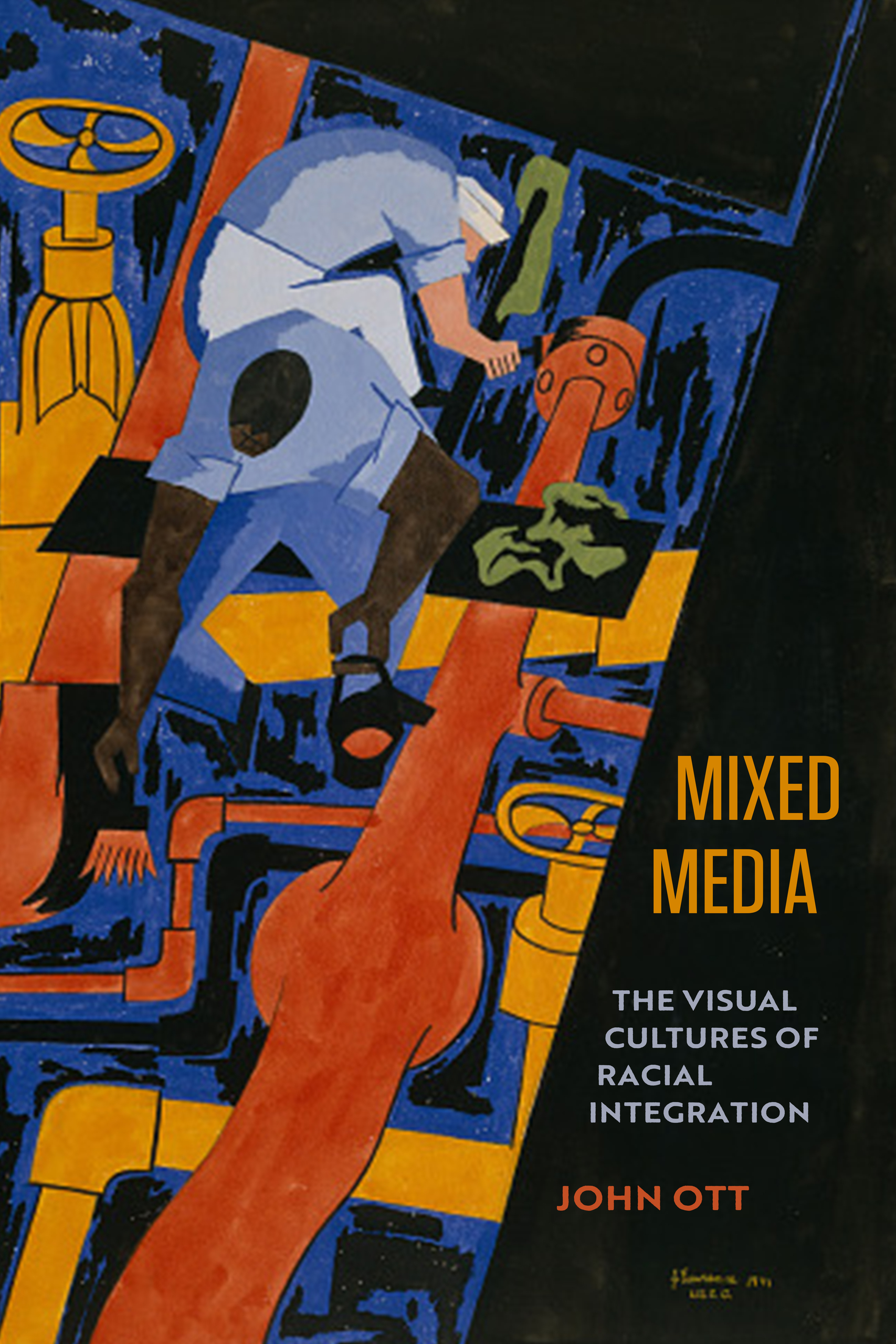
PUB: Mixed Media by John Ott

John Ott has published his new book, Mixed Media: The Visual Cultures of Racial Integration, with the University of California Press.

https://www.ucpress.edu/books/mixed-media/paper

This volume investigates Black and white artists’ efforts toward racial integration, from the infamous 1931 Scottsboro Boys trial until Brown v. Board’s 1954 desegregation of public schools. Individual chapters investigate the nationwide public art initiatives of the New Deal, the imagery and cultural programs of the multiracial Popular Front, graphics produced for CIO-member labor unions, Jacob Lawrence’s war paintings and other visual propaganda of the armed forces, and the struggle of New York abstract painters of African descent to navigate the criticism, galleries, and markets of the mainstream art world.

Ott is Professor of Art History at James Madison University in Virginia.

CFP: La Créole journal

The Louisiana Creole Research Association (LA Creole, http://www.lacreole.org) invites submissions for its 2026 journal, La Créole, on subjects relevant to its mission of advancing family research, providing education, and celebrating Creole history and culture.

There is evidence that both French and Spanish colonial Louisiana identified all its people (white, black, and mixed), both free and enslaved, who were born in the new world of old world stock, as Créole. That included the offspring of Europeans (predominantly French and Spanish), Africans, and a mixture of both that could also include Native Americans. Therefore, the descendants of all these people can claim Creole heritage. LA Creole identifies the gens de couleur, or “people of color,” as the mixed-race descendants of those early colonial inhabitants of Louisiana who became a unique ethnic group.

The journal seeks scholarly articles of 2,500-3,500 words. Articles must be accompanied by illustrations, submitted as .jpgs. Shorter articles related to cultural themes such as recipes and traditions can be 750 words in length and must also be illustrated. We also invite submission of historic photographs with descriptions of the subjects and family history, which will be published as single page articles. An abstract is needed before the editorial staff approves your article. The abstract is a summary of your proposed article and should be 250 words or less.

Scholarly articles should be based on primary and secondary sources and formatted according to the Chicago Manual of Style. Footnotes are required, but a bibliography is not needed. The staff of La Créole can assist writers with questions about footnotes, format, and digital images.

The first step in the publication process is the submission of an abstract of the proposed article. Abstracts are due by May 1st 2026. Please include a brief author bio.

IMPORTANT DATES:
Submission of abstracts: May 1, 2026

Notification of acceptance of publication: May 15, 2026

Submission of completed articles: July 1, 2026

Final edit with digital images: September 1, 2026

Date of publication: October 15th 2026

Please submit abstracts to the co-editors, Melissa Daggett and Alan Rosenberg: mmdaggett@yahoo.com, revoile@verizon.net

http://www.lacreole.org

Convening for “Carrie Mae Weems: Something Grander Still”

Carrie Mae Weems: Something Grander Still
Austin, TX, and San Marcos, TX, Mar 5–06, 2026

This program brings together eight artists who, in the 1980s, embraced photography and video as means to bring visibility to the histories and perspectives of people of color, women, LGBTQ+, and/or working-class communities. Discussing how they developed new methods and ideas about photography, film, and documentary, this program illuminates the legacies of these experimental practices in contemporary art.

Convened on the occasion of the exhibition “Carrie Mae Weems: Something Grander Still” (January 30–May 9, 2026) at the Art Galleries at Black Studies at The University of Texas at Austin, invited artists will discuss their various projects to recover then-unsung photographic histories; to rethink the politics of representation and media; and to open art and educational institutions to the large and diverse publics they serve. Delving into the connections between these artists’ efforts, this convening offers a group oral history of artworks and publications collected in AGBS’ “Carrie Mae Weems: Something Grander Still.”

MARCH 5, 2026     University of Texas at Austin, Art Building, Room 1.102

3-4:45 pm / Panel 1: “Photography’s New, Old Histories”

Joy Gregory and Deborah Willis converse about their work in the 1980s to build archives, books, and associations for photography of the African diaspora. Moderated by Eddie Chambers.

Refreshments to follow from 5 – 6 PM

Register here for Day One: https://www.eventbrite.com/e/1980508496226?aff=oddtdtcreator

MARCH 6, 2026  Texas State University, Wittliff Collections

1-2:45 pm / Panel 2: “Documentary in Contention”

Ben Caldwell, Janet Delaney, and Ingrid Pollard discuss the questioning of documentary taking place in the 1980s, and how this questioning was intertwined with community-building and activism. Moderated by Ariel Evans.

Intermission

3:15-5 pm / Panel 3: “Photography, Place, Position, Politics”

Marilyn Nance, Martha Rosler, and Will Wilson consider the international scope of documentary film and photography; thinking through how geopolitical concerns and increasingly global discourses about identity informed artists working in the 1980s and 1990s. Moderated by Erina Duganne.

Register here for Day Two: https://www.eventbrite.com/e/something-grander-still-convening-day-two-tickets-1980570080426

This program is supported by a Curatorial Research Fellowship from the Andy Warhol Foundation for the Visual Arts and the Humanities Institute at The University of Texas at Austin.

JOB: Sr Instructional Prof, Architectural Studies @ UChicago

The Department of Art History (https://arthistory.uchicago.edu/) at the University of Chicago invites applications for a position as a Senior Instructional Professor (Open Rank) in Architectural Studies, with an expected start date of September 1, 2026, or as soon as possible thereafter. The selected candidate will be appointed at the rank of Assistant Senior Instructional Professor, Associate Senior Instructional Professor, or Senior Instructional Professor, depending on qualifications and educational background. The initial appointment is for a minimum of 3 years, with longer initial terms possible depending on qualifications and initial rank. The position is renewable upon successful review.

This search is part of an initiative to continue to build the Department of Art History’s Architectural Studies program, which offers both historical and studio-style courses to undergraduates. In consultation with the Director of Undergraduate Studies for Architecture and the Department Chair, this position will be responsible for overseeing the curriculum planning of the Architectural Studies program; coordinating and supporting design studio classes; developing and coordinating extracurricular studio work and programming; advising students on theses and career pathways; and supervising and reviewing related lecturers and Teaching Assistants. The candidate hired into this position will typically teach 4 courses per year (on the quarter system), which may include architectural studies core curriculum, introductory, and advanced design studios or seminars. Senior Instructional Professors of all ranks are required to engage in regular professional development.

Salary Range or Pay Grade:
Assistant Senior Instructional Professor: $82,500-$92,000; Associate Senior Instructional Professor: $90,000-$100,000; Senior Instructional Professor: $98,000-$115,000. This base pay range is for a nine-month academic appointment paid over twelve months. The position also includes a relocation allowance for qualifying expenses.

This position is benefits-eligible. The University of Chicago offers a wide range of benefits programs and resources for eligible employees, including health, retirement, and paid time off. Information about the benefit offerings can be found in the Benefits Guidebook (https://mybenefits.nfp.com/UChicago/benefits-guide/).

Qualifications:
The successful candidate must have experience teaching architecture at the university level, the ability to work collaboratively in an interdisciplinary environment, and excellent organizational and management skills. We especially seek candidates who are well positioned to shape the future of architectural studies within the greater context of the arts and humanities. Preferred qualifications include experience teaching architecture in a liberal arts context, experience in curriculum design or oversight, management or supervising experience, relevant pedagogical training, and a professional design background.

BA/BArch required, and MA/MArch or Ph.D. preferred. All requirements for receipt of a BA/BArch, MA/MArch, or Ph.D. in architecture or a related field must be completed prior to the start of the appointment.

Application Instructions:
Applicants must upload the following materials to the University of Chicago’s recruitment website at apply.interfolio.com/180001 by 10:59 PM Central Time/11:59 PM Eastern Time on Monday, February 16, 2026:

– CV
– Cover letter
– Teaching statement
– Teaching portfolio
– Contact information for three references

Applicants may be asked to provide additional materials following the initial review of applications. Questions may be directed to arthistory@uchicago.edu.

This position is contingent upon budgetary approval.

Equal Employment Opportunity Statement:
The University of Chicago is an equal opportunity employer and does not discriminate on the basis of race, color, religion, sex, sexual orientation, gender, gender identity or expression, national or ethnic origin, shared ancestry, age, status as an individual with a disability, military or veteran status, genetic information, or other protected classes under the law. For additional information please see the University’s Notice of Nondiscrimination (https://www.uchicago.edu/about/non_discrimination_statement/).

Job seekers in need of a reasonable accommodation to complete the application process should call 773-834-3988 or email equalopportunity@uchicago.edu with their request.

ACRAH will be at CAA2026!

The ACRAH/CAA2026 panel will be Excavating Race in the Archive

This session will remote/hybrid on Thursday, February 19, 2026 at 11:00am – 12:30pm local Chicago time. If you are in Chicago you can attend in person at the Hilton Chicago – 3rd Floor – Williford B.

Check out the full session description here: CAA2026

The ACRAH Business Meeting will be held in the same room on Thursday, February 19, 2026 from 1:00pm-2:00pm local Chicago time.

PUB: Working Towards a Critical Race Art History

Our new article has been published in kritische berichte.

Abstract:

This essay outlines the foundations and aims of Critical Race Art History, a methodological approach that examines how race operates in art and visual culture. Through case studies of artworks ranging from 18th-century porcelain to contemporary art, the authors reveal how racial hierarchies are naturalized through representation. They argue that race functions as a structuring visual logic and call for a critical reexamination of art history’s disciplinary assumptions.

Check it out here: https://journals.ub.uni-heidelberg.de/index.php/kb/article/view/113082

Jacqueline & Camara