Call for Research Writing: Submit your research by Sept. 15, 2025 to the Met Journal

The Metropolitan Museum of Art invites  invite you to submit your research to the Metropolitan Museum Journal.

The Journal publishes articles and research notes that contain original research on works of art in The Met’s collection.

Articles contribute extensive and thoroughly argued scholarship—art historical, technical, and scientific—whereas research notes are narrower in scope, focusing on a specific aspect of new research or presenting a significant finding from technical analysis, for example.

The maximum length for articles is 8,000 words (including endnotes) and 10–12 images, and for research notes 4,000 words (including endnotes) and 4–6 images. 

The process of peer review is double-anonymous. Manuscripts are reviewed by the Journal Editorial Board, composed of members of the curatorial, conserva­tion, and scientific departments, as well as scholars from the broader academic community.

Articles and research notes in the Journal appear in print and online, and are accessible in JStor on the University of Chicago Press website.

Deadline for submissions for Vol. 61 (2026): September 15, 2025.

Submission guidelines: 

www.journals.uchicago.edu/journals/met/instruct

Please send materials to: 

journalsubmissions@metmuseum.org

Questions? Write to:

Elizabeth.Block@metmuseum.org

Inspiration from the collection

www.metmuseum.org/art/collection

View the Journal

http://www.journals.uchicago.edu/loi/met

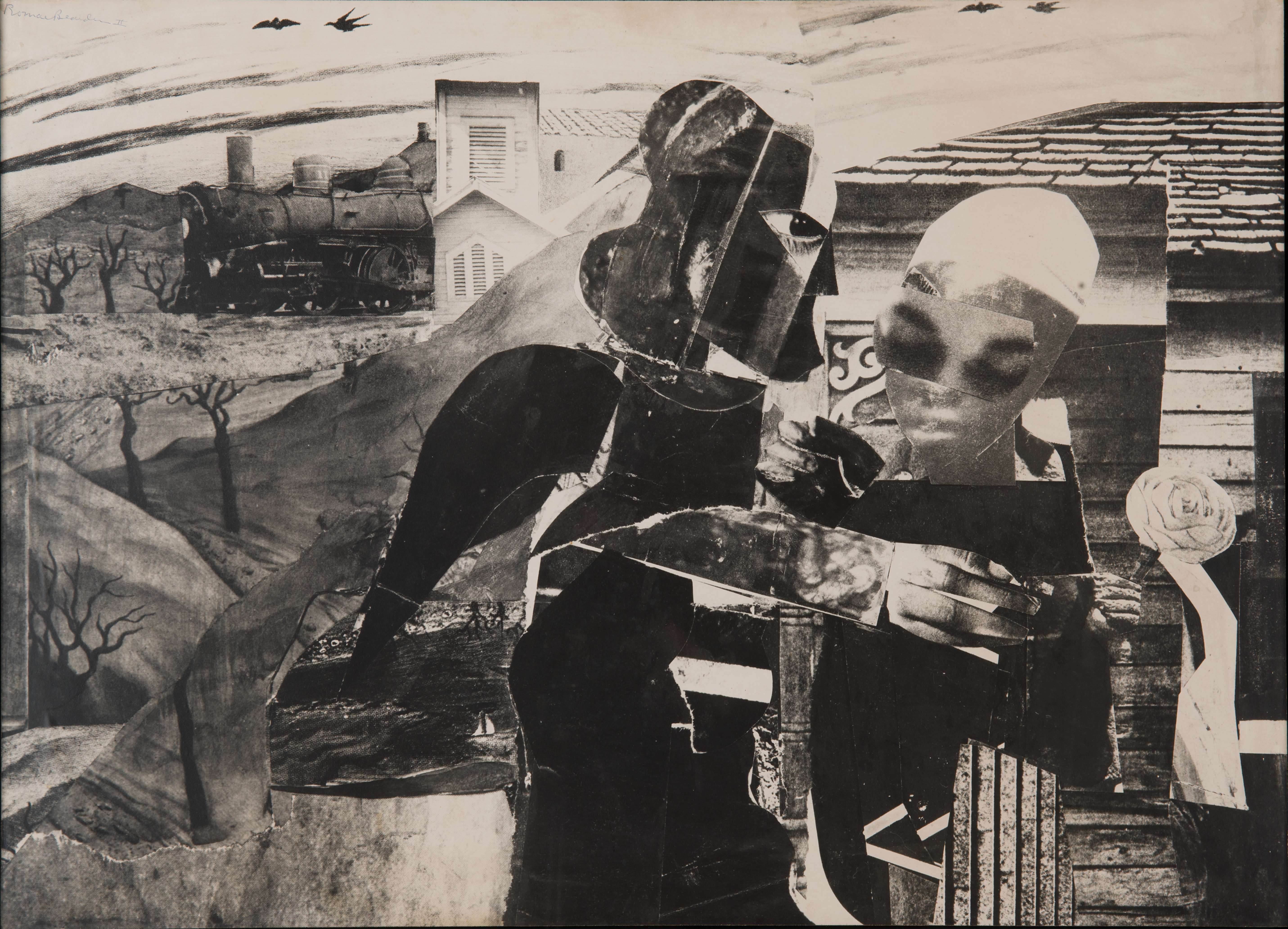
REF: The Romare Bearden Catalogue Raisonné Project

The Wildenstein Plattner Institute is proud to announce the inaugural release of THE ROMARE BEARDEN CATALOGUE RAISONNÉ PROJECT, featuring over 200 of the artist’s unique works created between 1964 and 1969. This significant launch represents a major step forward in the study of one of the 20th century’s most influential African American artists.⁠

Romare Bearden, Prevalence of Ritual: Tidings, 1964, Photostat mounted on fiberboard, 28 3/4 x 39 3/4 inches (73 x 101 cm), Carnegie Museum of Art, Pittsburgh. Photograph © 2025 Carnegie Museum of Art, Pittsburgh © Romare Bearden Foundation / Licensed by VAGA at Artists Rights Society (ARS), NY. RB27TI

Working in partnership with the Romare Bearden Foundation, WPI’s team of researchers led by Dr. Camara Holloway have made incredible strides in identifying elements of the artist’s production: approximately 50 works presented in this first installment were previously unknown within the Foundation’s records. ⁠

The publication of this first installment includes an introductory text by Jacqueline Francis and Anne Monahan, “Romare Bearden, 1964–69: A Turning Point,” which describes Bearden’s artistic transformation — from painter and watercolorist to a nationally-recognized master of collage — as well as pivotal moments earlier in his career: http://bit.ly/4neTiox

We are thrilled to share the initial phase of this project with the larger community, and are looking forward to future installments with continued collaboration with the Romare Bearden Foundation, our technology partner Navigating.art and vital support from the Hasso Plattner Foundation.

Explore the first installment of the digital catalogue here! http://bit.ly/4kRFONU

Curators searching for Lois Mailou Jones painting for Alma Thomas retrospective

Dear Colleagues and Friends:

As some of you may know, Seth Feman, Curator of Exhibitions & Curator of Photography at the Chrysler Museum of Art, and I are co-curating a large traveling retrospective on Alma Woodsey Thomas, to open at the Chrysler summer 2021. You can learn more about the project here: https://www.culturetype.com/2018/04/14/locating-alma-thomas-forthcoming-retrospective-will-explore-artists-creative-life-and-hometown-connections/

Alma Thomas: A Creative Life is a collaborative, interdisciplinary effort to examine the many ways that creativity manifested in Thomas’s life, including (but not limited to) self-fashioning, theater, teaching, and gardening. We are excited to have turned up many works by Thomas—and some of her contemporaries and students—that are little known or unpublished. That said, there are always objects that will really change our understanding of the artist—except in some instances we can’t find them (or haven’t found them—yet!). I’m writing about just such a case: we are DESPERATELY seeking the following watercolor, which we believe was, at one time, in or associated with the Barnett-Aden Collection or shown at the Smithsonian Anacostia Community Museum in the 1970s.

Loïs Mailou Jones (American, 1905–1998)
Alma’s Backyard Garden,undated
Watercolor, dimensions unknown
Unlocated

An image may be viewed by following this link: https://drive.google.com/open?id=1jum6ZG5on77pocVr3U8mrnea7DlCeWju

If anyone has any leads, we would be incredibly grateful to know about current ownership and whereabouts. We would also appreciate knowing about any Thomas works in institutional or private collections that we may have missed in the initial casting of our net. Please email either or both of us with information or suggestions:

sfeman@chrysler.org or jwalz@columbusmuseum.com

We thank you in advance for any assistance you may provide. Happy New Year from Western Georgia!

Jonathan Frederick Walz, Ph.D.
Director of Curatorial Affairs
& Curator of American Art
The Columbus Museum
1251 Wynnton Road
Columbus, GA  31906
(706) 748.2562 x3200ßnote new extension number
jwalz@columbusmuseum.com

A Digital Humanities Project: The Fashion and Race Database — Art History Teaching Resources

During the first four years of teaching at The New School as a fashion studies scholar and a professor of color, I was faced with a challenge: there was a dearth of historical and pedagogical resources for exploring fashion history and theory outside of the Western canon–particularly when it came to how race has influenced aesthetics…

via A Digital Humanities Project: The Fashion and Race Database — Art History Teaching Resources

Call for Author: essay on Carroll Parrott Blue

Carroll Parrott Blue, MFA
carrollpblue@hotmail.com

I am looking for an art scholar who specializes in late 20th and early 21st African American Art who is interested in contributing an introductory chapter on a 60-year review of the works of my work. As artist Carroll Parrott Blue, I am assembling my archive and am open to an interview by the author.

From the 1960s to the present, my work encompasses published written works, still photography, film, video, public art, digital media, digital stories, interactive multimedia, ARC GIS Story Maps, production notes and other materials associated from many of the productions.

The essay that will support the completed archival report should be roughly 6,000-8,000 words with notes and references included. The interview as a transcript will be separate. The main focus of the essay is on an overall or comprehensive analysis of the work. The author should be prepared to engage formal analysis, the history of the technological changes from analog to digital, race and gender theory, and biography.

Debating Cultural Appropriation in the Art History Classroom

I am always looking for activities that make art history relevant to my students as well as disturb the problematic ways in which our discipline has been framed. Students respond enthusiastically when they are allowed to delve into current events that connect with art’s histories. In order to facilitate what can be heated conversations I…

via Debating Cultural Appropriation in the Art History Classroom — Art History Teaching Resources

Art Historian Helen M. Shannon’s Passing

Capture5

Helen M. Shannon, Ph.D., flanked by Dr. David Milburn and Cecile Keith Brown, date unknown. Source: Dr. David Milburn Legacy Award webpage. Photographer’s name not known.


It is with deep sadness that we report the passing of Helen M. Shannon, Ph.D. The photo was likely taken when Helen worked in the Detroit Institute of Arts’ Education Department, 1976-87, according to her LinkedIn page.

We have suffered a profound loss in our field and it will be felt among those with whom she worked. A few years back, a former student wrote that Helen Shannon had been an important mentor, calling her “one of the most inspirational career driven women I have ever met. I have never had a professor who has pushed me so hard to succeed, and I will be forever grateful to the role she has played in the development of my career as I pursue my Master’s Degree.” Helen inspired many of us, and she will not be forgotten.

Mark Campbell of the University of Arts, where Helen was Associate Professor and Director of the M.A. Program in Museum Studies, has written this account of his colleague:

“It is with great sadness that we announce the sudden passing of
Associate Professor Helen Shannon. Helen has been a well-respected
member of the UArts faculty since joining the University in 2006,
directing the Museum Education program within Museum Studies, and
since fall 2013 serving as coordinator of Graduate Studies. An
accomplished educator and museum professional, Helen has had a deep
and lasting effect on the scholarship and professional training in her
field.

Helen received a BA from Stanford University, an MA from the
University of Chicago, and a PhD from Columbia University – all in Art
History. Her dissertation was titled “Race and cultural nationalism in
the American modernist reception of African art.”  Notable
professional appointments include executive director of the New Jersey
State Museum and educator in charge, Office of Public Programs, at the
Metropolitan Museum of Art. Freelance curatorial work includes “In the
Spirit of Martin: The Living Legacy of Dr. Martin Luther King Jr.,” a
Smithsonian Institution traveling exhibition, and “Biennial 2000: At
the Crossroads,” for the African American Museum in Philadelphia.

In 2015 Helen published, “Norman Lewis: Presence and Absence” as part
of “Procession: The Art of Norman Lewis” (University of California
Press – Ruth Fine Editor). She was in the process of completing an
important book in the field of Museum Education, “History and
Understanding of Museum Learning.”  Active in the museum world through
lectures and symposia, Helen has served on many boards including
current appointments with the Mid-Atlantic Association of Museums and
the African American Museum.  She was also an ongoing member of the
African American Collection Committee of the Philadelphia Museum of
Art.

Within the UArts community and beyond, Helen was a respected scholar,
known for her integrity, grace and solid professionalism. She
instilled in her many students a tenacious work ethic, deep respect
for knowledge, and an awareness of the central role that museums play
in the enrichment of our lives.

An event celebrating the life of Helen Shannon will be announced to
the community in the coming weeks.”


– –Mark Campbell, Dean

College of Art, Media & Design

The University of the Arts

320 Broad Street

Philadelphia, PA 19102

215.717.6120

uarts.edu


IMAGE BELOW: From the award-winning exhibition catalogueProcession: The Art of Norman Lewis (2015). Source: GoogleBooks.


Screen Shot 2018-01-21 at 6.37.54 PM

REF: Race & Gershwin’s “Porgy and Bess”

On the 10th of October 1935, George Gershwin’s opera Porgy and Bess opened in the Alvin Theatre on Broadway, New York. A few years earlier, Singer Al Jolson attempted to musicalise the story starring as a comic blackface Porgy, his minstrel shows, an unacceptable racist concept nowadays. The Broadway opening was unprecedented in U.S. history due to […]

via Racism in Opera: Gershwin’s Porgy and Bess — A R T L▼R K

Augustus Washington: Visible, Not Seen

Augustus Washington (1820/21-1875) was “the son of a South Asian immigrant” a formally enslaved black Virginian, according to this article published in The Dartmouth Alumni Magazine this spring. Washington studied at Dartmouth, entering with the class of 1847. There, on the Hanover, New Hampshire campus, Washington learned how to make daguerreotypes. Washington and Dempsey R. Fletcher were the only students of African descent at Dartmouth in 1843-44.

Washington’s portrait of John Brown (circa 1846-47) is well-known. Yet there are no confirmed images of Washington himself. Photo historians have been searching and writing about Washington for decades, and the published literature on Washington continues to grow.

Ad-for-Augustus-Washingtons-daguerreotypes-in-Hartford-Daily-Courant-10081852-by-Conn.-Historical-Society

“Advertisement from The Hartford Daily Courant, October 8, 1852. This ad shows the world having its picture taken at Washington’s studio.” – Image, Connecticut Historical Society

Wilson Jeremiah Moses’ Liberian Dreams: Back to Africa Narratives from the 1850s (Penn State University Press, 2010) provides the opportunity to hear Washington’s voice through his written words. Before his migration to Liberia in 1853, Washington wrote this letter to an US newspaper. In Liberia, Washington was a photographer, a sugar cane planter and landowner, and a politician. (Washington’s Dartmouth classmate, Dempsey R. Fletcher, mentioned above, also had lived in Liberia as boy and returned there after studying at Dartmouth.) The African Colonization Movement is a complex subject, and Washington’s images of its key figures helps us think about “what” Africa was and is.

3g06770u

Augustus Washington, Urias Africanus McGill, circa 1854-60. Image: Better Photography website 

REF: Race and Norman Rockwell

On the 6th of March 1943, iconic painter and illustrator of American culture Norman Rockwell, published Freedom from Want or The Thanksgiving Picture in The Saturday Evening Post, one of over 300 covers he produced for the Indianapolis publication during his lifetime. It was the third of four oil paintings known as the Four Freedoms inspired by […]

via White on White: Hidden Race in Rockwell’s ‘Freedom from Want’ — A R T L▼R K