Opportunity for Historians of 19th and early 20th-century African American Architecture and Material Culture and Louisiana History and Culture

Betty Reid Soskin is the granddaughter of Louis Charbonnet (1869-1924), architect and builder of Corpus Christi Church and School in New Orleans.  Ms. Soskin has information and memorabilia about her grandfather that she would like to share with reputable researchers of 19th and early 20th-century African American architecture and material culture, and/or Louisiana history and culture.

Initially, a creator of ornamental iron work, Louis Charbonnet became an engineer, inventor and millwright.  His New Orleans business establishment dates to 1893.  After St. Louis School was destroyed in a 1915 storm, Charbonnet drew plans for its reconstruction and supervised the project.

To learn more, contact Ms. Soskin cbreaux@earthlink.net

Also see Betty Reid Soskin’s blog!

louischarbonnetsr

Photo of Louis Charbonnet Sr. at “The Charbonnets” homepage

The Great Man in “Patriots Day”

patriots-day-poster-featured-banner

I’ve been interested in response to Patriots Day, which I’ve not yet seen. Separate from the New York Times review by Glenn Kenny, a feature penned by the Times’ New England Bureau Chief Katharine Q. Seeyle offers the sense that Bostonians have their criticisms of the movie. Among them is the composite character played by Mark Wahlberg. To me, this popular response registers as a critique of the Great Man theory, a notion that’s been under scrutiny in Europe and North America since the nineteenth century.

Wahlberg’s image is being used to promote Patriots Day and this conceptual image is as well. The latter deserves more study than I can give it here. But, as we start a new academic semester this week and next, maybe this ad would be a good one to give to students of visual cultural studies.

John W. Mosley’s Mid-20th Century Photos of Black Philadelphia 

Check out @hyperallergic’s Tweet: https://twitter.com/hyperallergic/status/813744006114971648?s=09

The Sounds of Ethncity, Race and Region

how-to-speak-midwesternIn today’s New York Times, Jennifer Schuessler reviewed a new book, How to Speak Midwestern. Interestingly, the headline in the print edition is:  “Midwesterner, Yes, You Do Have an Accent”. This phrasing is a gentle nudge to rethink what might be perceived as a norm, which, of course, is actually as inflected as anything else. Apparently, this truth is one of author Edward McClelland’s motivations for writing this book.

In the review, Schuessler comes out from behind the curtain of reviewer neutrality. She pronounces, self-deprecatingly: “Full disclosure: Like Mrs. Clinton, I’m a white woman who grew up in the Chicago suburbs. When it comes to pinched nasal vowels and strongly pronounced r’s (a phenomenon linguists call rhoticity), I’m With Her.”

Schuessler also notes: “The heavily industrialized (and segregated) Inland North–as dialectologists call the region stretching from roughly from central New York across the Great Lakes–‘has a wider divergence between white and black speech than anywhere in the country,’ Mr. McClleland writes, with African-Americans largely maintaining speech patterns brought from the South. (Mr. McClelland notes the existence of various Midwestern ‘blacaccents,’ though he doesn’t explore them.)”

Such “blaccents” are not the only subjects deserving of further study by critical race scholars. So is the consideration of the visual. Tellingly, the designers for McClelland’s book eschew figures for its cover, as if to acknowledge the demographic diversity of the region’s populace. Smart move.

Consider the ideology of an earlier publication (1960) with almost the same title:

thomas-how-to-speak-midwestern

This book is a “humor” offering. See Google Books for a brief excerpt:

“To speak good Midwestern you need to: Get gear’d up by studyin’ this book. Before you know it you’ll be speaking Midwestern Pertnear as good as Everybody.”

Thomas’s cover design is serious in its invocation, i.e., the Midwest is American Gothic (1930). It is a move to use the authority of the original painting, without any awareness of its intended satire.


In This Political Season, A Film Portrait of East Coast, White Working Class Racial Identity

3faf6055d74f395e0089a36c2d2ee0f9

Critic A.O. Scott take a while to get around to it in yesterday’s New York Times, but towards the end of his review he writes: “The movie takes up, indirectly and perhaps inadvertently but powerfully and unmistakably, a subject that has lately reinserted itself into American political discourse. It’s a movie, that is, about the sorrows of white men.” Of the film’s main character, Lee Chandler (played by Casey Affleck),  a Boston apartment building janitor who was born in a Bay State seaside town, Scott surmises: “Cast out of this working man’s paradise, Lee is also exiled from the prerogatives of whiteness.  . . .to deny that Manchester By the Sea has a racial dimension is to underestimate its honesty and overlook its difficult relevance.”

Sounds like critical race visual cultural studies is in yet another the critical conversation.

A.O. Scott, “Currents of Grief Beneath Everyday Life–Film Review,” New York Times, November 19, 2016, Weekend Arts Section I, 1, 12.


The Sounds of Race


Siri_Stock_Dreamstime814102654-1.png

Quentin Hardy, ” Seeking a Choice of Voices in Conversational Computing,” NY TIMES, Mon., Oct. 10, 2016, B1, B4.

Cultures and ethnicities are represented–visually, orally, and in other ways as well.

Joseph Beuys proposed that speech is sculptural, and certainly, we do perceive the body “behind” the words that form them.

Asked the question “What can I do for you?” what image is formed in our minds?

[Voice over American actor Susan Bennett provides the voice of Siri for Apple.]


On Race-casting

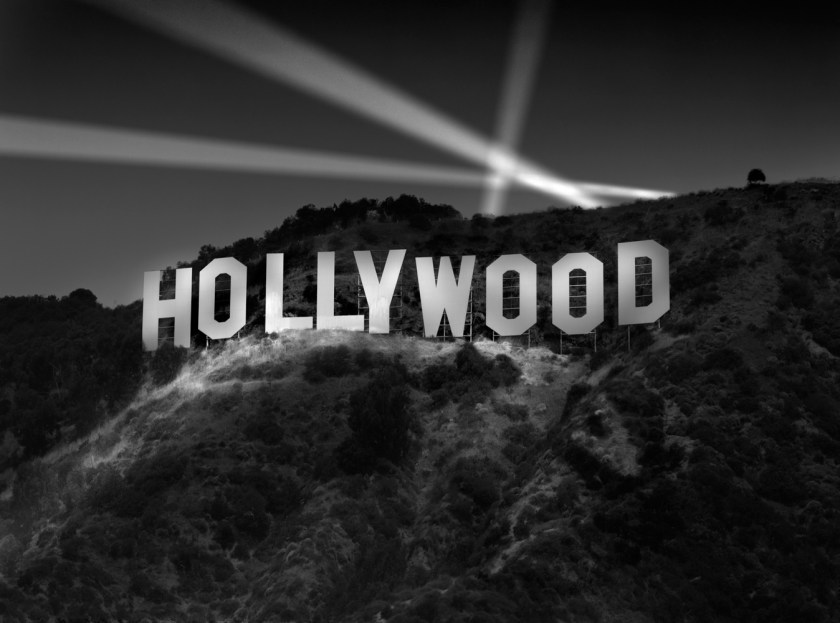
richard-lund-hollywood-sign-at-nightImage from Filmathon–For the Love of Films

The ethno-racial look always informs the casting decision, from Bourne and Bond to Eliza Doolittle, Evita, M. Butterfly, Nina…and so on.

Yesterday, in the Guardian, film writer Ben Child wrote a blunt critique of “yellow-casting.” Child makes many good points. But a word (i.e., warning) to the reader: this op-ed is not for the faint of heart. Child’s piece is, as they say on sports radio, “real talk.”

And, if you wanna get really riled up, see Britt Julious’s op-ed from last year.

Color portraits of immigrants at Ellis Island – in pictures | Culture | The Guardian

Immigrants as types — Ellis Island arrivals

CFP: Terra Foundation Int’l Research Travel Grants for US-based Scholars

Terra Foundation International Research Travel Grants offer US-based scholars working on American art and visual culture prior to 1980 the opportunity to conduct research outside the United States. Grant funding is available for short-term travel for scholars whose research projects require study of materials outside the United States, enabling scholars to:

  • Discover new primary source material;
  • Experience works of art first-hand in museums and private collections;
  • Make contact with artists, critics, art dealers, archivists, curators, and university scholars;
  • Consult archives and library collections outside the US;
  • Establish professional networks for future research.

Applications are due Jan. 15, 2017.
Grants will be awarded to doctoral students as well as postdoctoral and senior scholars.

For more information, go to the Terra Foundation’s website.

CFP: “Refracting Abstraction” symposium @ Stanford University, Jan. 27-28, 2017 | deadline Oct. 3, 2016

The Anderson Collection, Standford University

Photo (2014): Tim Griffiths at Stanford News

The discussion around what constitutes the boundaries of Abstract Expressionism continues to recur despite decades-long attempts by revisionists. Most provocatively, Ann Gibson’s Abstract Expressionism: Other Politics (1997) demonstrates how women, artists of color, and queer artists were systemically left out of the canon. Two decades later, it has become de rigeur to call for the addition of these artists into exhibitions, but academic scholarship has lagged. Jackson Pollock, Clyfford Still, Mark Rothko, Willem de Kooning, and Franz Kline remain the familiar anchors of Abstract Expressionism. Here at Stanford, The Anderson Collection showcases important works by the above-mentioned names yet there are many artists not currently a part of our permanent collection whose involvement in the movement has been omitted from the oft-repeated narratives of the period.

We celebrate the recent focus on women, on cultural inclusivity, on gender expansive dialogues and the move to allow a spectrum of identifications. The museum takes this opportunity to look in depth at black artists working abstractly at mid-century as a case study in order to nurture the growing scholarship in this area. How did the art praxis of African-American artists intersect with the overall Abstract Expressionist movement? How does African-American cultural production continue to undergird key fundamentals of mid-century abstraction? There were black Abstract Expressionists of both the first and second generation. Some showed at top-notch galleries associated with the Abstract Expressionist movement—Romare Bearden at Kootz Gallery and Norman Lewis at The Willard Gallery. Others such as Peter Bradley had advocates in the often denigrated figure of Clement Greenberg. This symposium aims to make visible these intertwined narratives in order to explore how blackness and the Abstract Expressionist movement have been tethered all along; but more often than not, their periodic overlapping aims tend to move between invisibility and hypervisibility depending on the needs of a public.

With a variety of programming over a two-day period, the Anderson Collection will work with scholars, professors, artists, musicians, collectors, and performers to open these topics up to wide discussion. The symposium will feature a keynote speaker, workshops, a live performance, and a conversation with contemporary black artists working in abstraction.


The two-day symposium is planned for January 27 and 28, 2017 at the Anderson Collection at Stanford University.


Interested participants are invited to submit an abstract of no more than 350 words along with a CV to andersoncollection@stanford.edu by October 10, 2016. Accepted participants will be notified by November 7, 2016. Presenters are invited to give papers suitable for 15- to 20-minute time slots.

The Anderson Collection at Stanford University is a world-class museum built around a permanent collection of 121 modern and contemporary American paintings and sculptures by 86 artists. As a center for research, scholarship, and appreciation of post-war and contemporary American art, the Anderson Collection works exemplify pivotal movements in modern art: Abstract Expressionism, Color Field Painting, Bay Area Figuration, California Light and Space, among others.


Organized by:

Andrianna Campbell, Doctoral Candidate, The CUNY Graduate Center

Jason Linetzky, Director, Anderson Collection at Stanford University

Aimee Shapiro, Director of Programming and Engagement, Anderson Collection at Stanford University


Collaborators include:

Jeff Chang, Executive Director, Institute for Diversity in the Arts, Stanford University

Richard Meyer, Professor of Art History, Department of Art and Art History, Stanford University

Alex Nemerov, Department Chair, Department of Art and Art History, Stanford University