The Grapevine

CALL FOR PROPOSALS–Apply for Terra Foundation Collection Grant (due August 4, 2025)

Terra Foundation Collections Grants encourage organizations worldwide to re-interpret and re-present their permanent collections.

Terra supports permanent collection projects that broaden understanding and pursue inclusive and expansive practices of American art, whether through reinstallation or temporary exhibitions drawn primarily from an institution’s permanent collection. They welcome proposals from museums, art centers, and community-based cultural organizations of varying sizes, annual budgets, and diverse geographies, within and outside the United States.

  • Planning grants typically range between $25,000 and $75,000.
  • Implementation grants are up to $100,000.
  • Grant support through this program is offered once yearly.

https://terraamericanart.fluxx.io/user_sessions/new

Call for Research Writing: Submit your research by Sept. 15, 2025 to the Met Journal

The Metropolitan Museum of Art invites  invite you to submit your research to the Metropolitan Museum Journal.

The Journal publishes articles and research notes that contain original research on works of art in The Met’s collection.

Articles contribute extensive and thoroughly argued scholarship—art historical, technical, and scientific—whereas research notes are narrower in scope, focusing on a specific aspect of new research or presenting a significant finding from technical analysis, for example.

The maximum length for articles is 8,000 words (including endnotes) and 10–12 images, and for research notes 4,000 words (including endnotes) and 4–6 images. 

The process of peer review is double-anonymous. Manuscripts are reviewed by the Journal Editorial Board, composed of members of the curatorial, conserva­tion, and scientific departments, as well as scholars from the broader academic community.

Articles and research notes in the Journal appear in print and online, and are accessible in JStor on the University of Chicago Press website.

Deadline for submissions for Vol. 61 (2026): September 15, 2025.

Submission guidelines: 

www.journals.uchicago.edu/journals/met/instruct

Please send materials to: 

journalsubmissions@metmuseum.org

Questions? Write to:

Elizabeth.Block@metmuseum.org

Inspiration from the collection

www.metmuseum.org/art/collection

View the Journal

http://www.journals.uchicago.edu/loi/met

FEL: Getty Scholars Program

PROVENANCE

For the 2026–2027 year, the Getty Scholars Program invites innovative proposals for projects that explore provenance and adjacent research areas, including but not limited to the history of collecting, the study of the art market, and broader explorations around the ownership of art objects. Relevant to all periods and areas of art production, the scholar cohort will be invited to examine and critique the arena of provenance studies while also envisioning its future, situated between the practices and demands of source communities, art historians, museums, and the market. Digitization and databases, such as the Getty Provenance Index, have also opened up the interdisciplinary possibilities of provenance research and laid the ground for art restitution efforts and other forms of reparation. Applicants are invited to propose projects, either individual or collaborative, that reflect upon the ownership, transfer, and movement of art objects from all world regions and time periods.

Please find the full call for applications and theme text on the Getty Scholars Program and Getty Pre- and Postdoctoral Fellowships webpages.
https://www.getty.edu/projects/getty-scholars-program/
https://www.getty.edu/projects/pre-and-postdoctoral-fellowships/

REF: The Romare Bearden Catalogue Raisonné Project

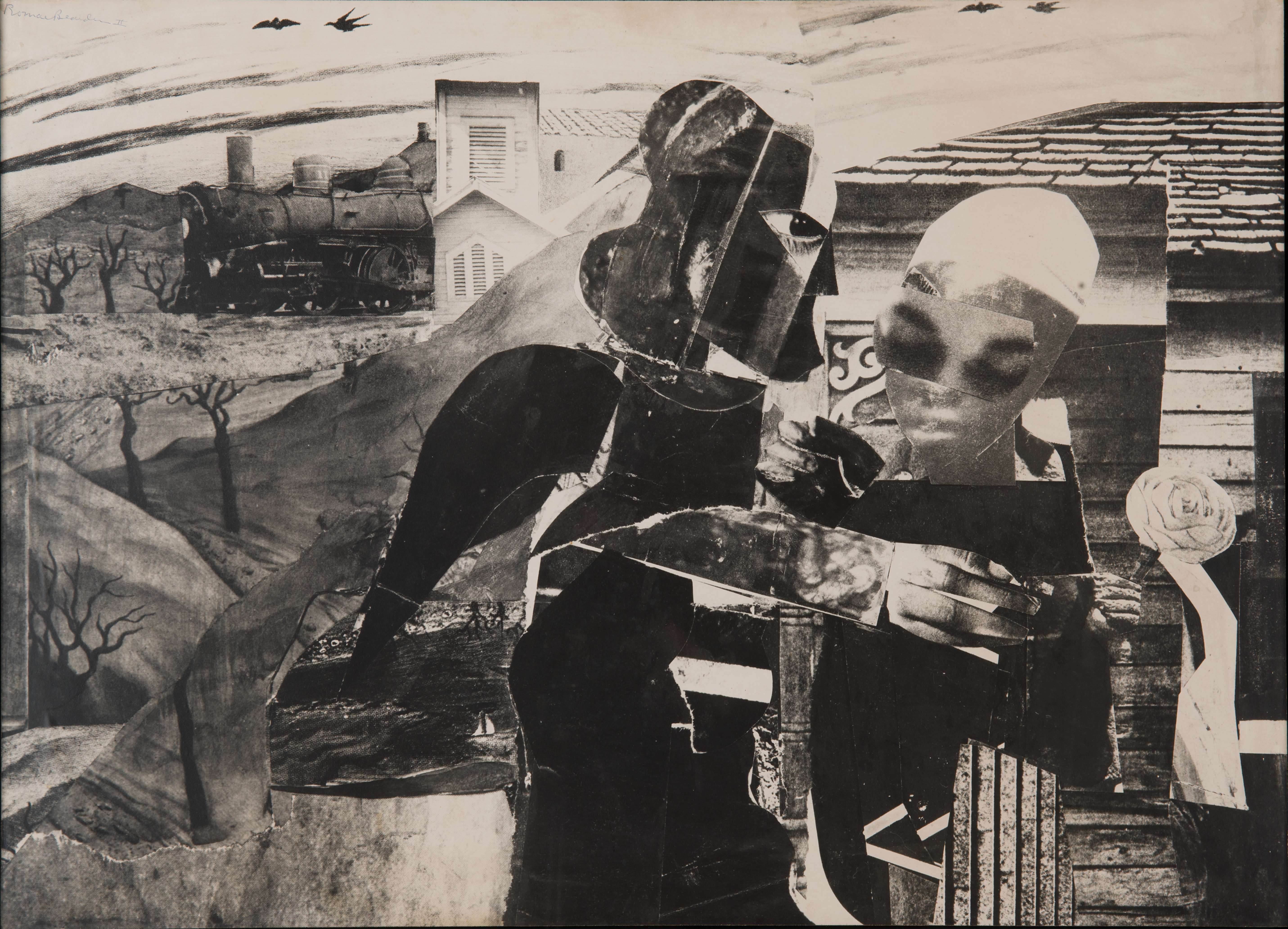
The Wildenstein Plattner Institute is proud to announce the inaugural release of THE ROMARE BEARDEN CATALOGUE RAISONNÉ PROJECT, featuring over 200 of the artist’s unique works created between 1964 and 1969. This significant launch represents a major step forward in the study of one of the 20th century’s most influential African American artists.⁠

Romare Bearden, Prevalence of Ritual: Tidings, 1964, Photostat mounted on fiberboard, 28 3/4 x 39 3/4 inches (73 x 101 cm), Carnegie Museum of Art, Pittsburgh. Photograph © 2025 Carnegie Museum of Art, Pittsburgh © Romare Bearden Foundation / Licensed by VAGA at Artists Rights Society (ARS), NY. RB27TI

Working in partnership with the Romare Bearden Foundation, WPI’s team of researchers led by Dr. Camara Holloway have made incredible strides in identifying elements of the artist’s production: approximately 50 works presented in this first installment were previously unknown within the Foundation’s records. ⁠

The publication of this first installment includes an introductory text by Jacqueline Francis and Anne Monahan, “Romare Bearden, 1964–69: A Turning Point,” which describes Bearden’s artistic transformation — from painter and watercolorist to a nationally-recognized master of collage — as well as pivotal moments earlier in his career: http://bit.ly/4neTiox

We are thrilled to share the initial phase of this project with the larger community, and are looking forward to future installments with continued collaboration with the Romare Bearden Foundation, our technology partner Navigating.art and vital support from the Hasso Plattner Foundation.

Explore the first installment of the digital catalogue here! http://bit.ly/4kRFONU

FEL: Dedalus Foundation – Senior Fellowship in Art History

Dedalus Foundation – Senior Fellowship in Art History
Accomplished writers and scholars seeking support for critical studies related to 20th-century painting, sculpture, and allied arts may apply for fellowships of up to $30,000. Applicants may not currently be students and must be US citizens.
Deadline: September 15, 2025 | dedalusfoundation.org

CFP: Nineteenth Century Studies Association Awards and Prizes

NCSA Announcement: Submissions Open for Emerging Scholars Award, Article Prize, and BIPOC Scholars Prize
Award Submission Deadline July 1, 2025

Submissions to the Emerging Scholars Award, the Article Prize, and the BIPOC Scholars Award are due July 1, 2025. Winners will each receive a cash award of $500 to be presented at the Annual NCSA Conference in 2026. Short descriptions are below, but please refer to the links to the NCSA website for complete information and lists of recent award recipients. https://ncsaweb.net/grants-funding-awards-prizes/

The Emerging Scholars Award: https://ncsaweb.net/ncsa-emerging-scholars-award/
The work of emerging scholars represents the promise and long-term future of interdisciplinary scholarship in nineteenth century studies. In recognition of the excellent publications of this constituency of emerging scholars, this award is given for an outstanding article or essay published while the author is within their doctoral studies or within six years following conferral of their doctorate. Articles that appeared in print in a journal or edited collection in 2024 or between January 1, 2025 and June 30, 2025 are eligible for the Emerging Scholars Award, which will be presented at the 2026 NCSA Conference. If the official date of publication does not fall within that span but the work in fact appeared between those dates, then it is eligible. NCSA encourages winners to attend the annual conference and will waive the conference registration fee. Entries can be from any discipline and may focus on any aspect of the long nineteenth century (the French Revolution to World War I), must be published in English or be accompanied by an English translation, and must be by a single author. Submission of essays that are interdisciplinary is especially encouraged. Articles may be submitted by the author or the publisher of a journal, anthology, or volume containing independent essays.

More information and link to submit articles are HERE:ncsaweb.net/ncsa-emerging-scholars-award/
Emerging Scholars Award Contact: Dr.Alexandre Bonafos, Chair of the Emerging Scholars Committee atEmergingScholarsNCSA@gmail.com

The Article Prize
The Article Prize recognizes excellence in scholarly studies from any discipline focusing on any aspect of the long nineteenth century (French Revolution to World War I). Entries must be published in English or be accompanied by an English translation, and submission of essays that are interdisciplinary is especially encouraged. Articles that appeared in print in a journal or edited collection in 2024 or between January 1, 2025 and June 30, 2025 are eligible for the 2026 Article Prize, which will be awarded at the 2026 NCSA conference. If the date of publication does not fall within that span but the work in fact appeared between those dates, then it is eligible. NCSA encourages winners to attend the annual conference and will waive the conference registration fee. Articles may be submitted by the author or the publisher of a journal, anthology, or volume containing independent essays.

More information and link to submit articles are here:https://ncsaweb.net/ncsa-article-prize/
Article Prize Contact: Dr. David Ogawa, Chair of the Article Prize Committee at ogawad@union.edu  OR ArticlePrizeNCSA@gmail.com
 

The BIPOC Scholars Prize
The BIPOC Scholars Prize recognizes excellence in scholarly studies from any discipline focusing on any aspect of the long nineteenth century (French Revolution to World War I) completed by a scholar who identifies as BIPOC (Black, Indigenous, or a person of color). Entries can be from any discipline, must be published in English or accompanied by an English translation, and submission of essays that are interdisciplinary is especially encouraged. Articles that appeared in print in a journal or edited collection in 2024 or between January 1, 2025 and June 30, 2025 are eligible for the 2026 BIPOC Scholars Prize, which will be presented at the 2026 NCSA Conference.  If the listed date of publication does not fall within that span,but the work appeared between those dates, then it is eligible. NCSA encourages winners to attend the annual conference and will waive the conference registration fee. Articles may be submitted by the author or the publisher of a journal, anthology, or volume containing independent essays.

More information and link to submit articles are here:https://ncsaweb.net/bipoc-scholars-prize/
BIPOC Scholars Prize Contact: Wendy Castenell and/or Emily August, Co-chairs of the Diversity and Inclusion Committee, atwcastenell@wlu.edu andemily.august@stockton.edu

FEL: Archives Research Fellowship @ Driskell Center

Call for Applications
Archives Research Fellowship Program at The Driskell Center

The David C. Driskell Center at the University of Maryland invites applications for its 2025–2026 Archives Research Fellowship program. Designed to support original scholarship rooted in the Center’s rich archival holdings, the program offers two low-residency fellowships over the academic year. Each fellow will receive a $3,000 stipend, paid in two installments, along with travel and lodging support for a short-term residency of up to three weeks at the Center. We welcome applications from scholars, artists, and cultural workers whose work engages with Black art, art history, and visual culture.

About The Archives

The Driskell Center Archives houses a growing collection of primary source materials across thirteen distinct collections documenting the lives, work, and critical reception of African American artists, scholars, and cultural institutions. Notable holdings include the personal papers of artist and scholar David C. Driskell—featuring six decades of correspondence, lectures, exhibition planning documents, and ephemera—as well as archives from the Weusi Artist Collective, artists Alonzo Davis and robin holder, art historians Tritobia Hayes Benjamin and Michael D. Harris, and arts administrator Terrie Rouse-Rosario. The Center’s archives contain correspondence, photographs, audiovisual materials, press clippings, and ephemera related to the history of Black art. The Center also maintains a non-circulating research library of over 5,000 volumes, including many rare exhibition catalogs. Together with its permanent collection of artworks, these resources support interdisciplinary research in art history, African American studies, visual culture, and museum studies. Applicants are encouraged to consult the Driskell Center’s website for finding aids and additional information, or to contact staff with specific questions about the holdings.
Eligibility
The fellowship is open to scholars, artists, curators, and cultural workers at any career stage, including graduate students (ABD), early-career researchers, and independent scholars. Applicants must demonstrate a clear research interest in African American art and visual culture, with a specific plan for using the archival and/or special collections of The Driskell Center. While the fellowship is open to U.S. and international applicants, travel reimbursement is limited to domestic travel within the United States.

Commitment 

Fellows are expected to complete a short-term research residency at The Driskell Center (up to three weeks) during the 2025–2026 academic year. The timing of the residency will be scheduled in coordination with the Center staff. Fellows will be asked to share their research in a public-facing format, such as a virtual presentation, blog post, or interview. A stipend of $3,000 will be paid in two installments: the first upon commencement of the fellowship on September 2, 2025, and the second upon completion of the residency and submission of a summary report by June 30, 2026.

Required Application Materials
Applicants should submit the following materials as a single PDF to archives-driskellcenter@umd.edu with “Archives Research Fellowship” in the subject line by Monday, June 30, 2025:
Research Proposal (max. 1,000 words) outlining the project’s goals, its relevance to the Driskell Center’s archival holdings, and the intended outcomes.
CV or Resume (max. 3 pages)
Proposed Residency Timeline indicating preferred dates for an on-site visit during the 2025–2026 academic year.
Contact information for one reference (name, title, affiliation, and email). Recommenders will be contacted directly after the application deadline.
Frequently Asked Questions

When will applicants be notified of their selection?
Applicants will be notified of fellowship decisions by July 31, 2025.

When can residencies take place?
Fellowship residencies must be completed during the 2025–2026 academic year (September 2, 2025 -May 8, 2026) . Specific dates will be scheduled in coordination with Center staff based on fellow availability and Center capacity.

Can international scholars apply?
Yes, international applicants are welcome; however, travel support is limited to domestic (U.S.) transportation and lodging expenses.

Is housing provided during the residency?
The fellowship includes funding to support short-term lodging near the University of Maryland, College Park. Fellows will receive assistance from staff in identifying accommodations but are responsible for making their own arrangements.

Do I need to submit a letter of reference with my application?
No. Please include the name, title, affiliation, and email address of one reference. Recommenders for finalists will be contacted directly after the application deadline.

Who can I contact with additional questions?
For inquiries about the fellowship, the application process, or the Driskell Center’s collections, please contact us at archives-driskellcenter@umd.edu with the subject line “Archives Research Fellowship.”

Call for Papers: Submit to the Metropolitan Museum Journal

The Editorial Board of the peer-reviewed Metropolitan Museum Journal invites submissions of original research on works of art in the Museum’s collection.  

The Journal  publishes  Articles  and  Research Notes. Works of art from The Metropolitan Museum of Art collection should be central to the discussion.  Articles  contribute extensive and thoroughly argued scholarship—art historical, technical, and scientific—whereas  Research Notes  are narrower in scope, focusing on a specific aspect of new research or presenting a significant finding from technical analysis, for example. The maximum length for articles is 8,000 words (including endnotes) and 10–12 images, and for research notes 4,000 words (including endnotes) and 4–6 images. 

The process of peer review is double-anonymous. Manuscripts are reviewed by the Journal Editorial Board, composed of members of the curatorial, conserva­tion, and scientific departments, as well as scholars from the broader academic community.

Articles and Research Notes in the Journal appear in print and online, and are accessible in JStor on the University of Chicago Press website.

The deadline for submissions for Volume 61 (2025) is September 15, 2025.

Submission guidelines: www.journals.uchicago.edu/journals/met/instruct

Please send materials to: journalsubmissions@metmuseum.org

Questions? Write to Elizabeth.Block@metmuseum.org

Inspiration from the Collectionwww.metmuseum.org/art/collection

View the Journalhttp://www.journals.uchicago.edu/loi/met

JOB: Curator, African art @ Neuberger Museum

The Neuberger Museum of Art is seeking a Harris Molnar (Rank TBD) Curator of the Arts of Global Africa and the Diaspora to work with traditional objects in the Museum’s collection, and to create contemporary projects that explore the broad ways in which Africa is being thought about today. 

The history of this collection at the Neuberger extends back to the opening of the Museum in 1974 at Purchase College, SUNY. The collection totals approximately 350 objects. The capstone of our current work in the arts of Africa was NEU Conversations: African Art in American Museums, a fall 2024 two-day virtual convening in which speakers shared their work in moderated panels, offering models for how museums can address issues of what constitutes a traditional object, provenance and restitution, engage and collaborate with communities both locally and in Africa, reframe the institutional representation of African art, and bridge the historic past and the creative present. 

The Neuberger seeks scholar who is engaged in these conversations and is familiar with the creation of the best practices guidance being generated by the Arts Council of the African Studies Association. The successful candidate will be able to review the categorization and provenance of objects of the extant collection so that the Neuberger’s display and conceptualization of the arts of Africa is in keeping with the highest and most contemporary standards and methodologies. 

The successful candidate will collaborate with source and descendant communities in their stewardship of the collection, with respect to the traditional arts as well as the contemporary program, to think historically in the present and to diversify and bring forth new narratives, particularly from Black communities. As an academic museum, the Neuberger is a space that supports consideration of the understanding, activation, and explication of the complex histories that can arise from work with arts of Africa and the legacy of Eurocentric colonialism and coloniality in museums. 

Primary responsibilities 
• Organize exhibitions in the area of the Arts of Global Africa and the Diaspora including loan exhibitions and exhibitions of works from the Museum’s permanent collection 
• Assess and research on the permanent collection of the Arts of Global Africa and the Diaspora (also add in note about restitution) 
• Publish researched scholarly publications associated with these projects. 
• Organize symposia in conjunction with these projects. 
• Work with leading artists from the Arts of Global Africa. Organize residencies and encourage the participation of Purchase College students in the making of new on-site works and activities.
• Coordinate the touring of exhibitions. 
• Cultivate a national and international network, engaging actively with scholars, institutions and museums working in the field of the Arts of Global Africa and the Diaspora 
• Participate in the academic life of the College and promote connections between the Museum and the rest of the College. 

Secondary responsibilities 
• Supervise and co-organize exhibitions by students and guest curators. 
• Collaborate closely with Purchase College’s Global Black Studies department 
• Offer special tours of exhibitions to students to match the content of specific courses. 
• Stand on departmental committees and search committees. 

Requirements 
• M.A. in a relevant discipline, such as Anthropology or Art History; Ph.D. or equivalent experience preferred; 
• Expertise in African material culture; 
• 7+ years of progressively relevant experience, preferably in a museum setting 
• Demonstrates a commitment to diversity and inclusion; 
• Track record of engagement with African communities; 
• Demonstrated writing, public speaking, research, and organizational skills; 
• Ability to travel as needed. 

To apply visit: https://jobs.purchase.edu/

Forgotten Histories of New Deal Art in Florida — Living New Deal Webinar (Mar. 25, 2025, 5PM PST/8PM EST)

Forgotten Histories of New Deal Art in Florida

Tuesday, March 25, 5:00PM PST/8:00PM EST

Here is the link to register for the webinar: https://www.eventbrite.com/e/forgotten-histories-of-new-deal-art-in-florida-tickets-1257489247189?aff=oddtdtcreator

Description:

As one of the largest and oldest states in the American South, Florida, the Sunshine State, is a powerhouse of industry, leisure, entertainment and politics in the twenty-first century. It is also crucial for understanding the diverse history of New Deal art and public works. This webinar describes how New Deal emergency relief and recovery programs impacted Florida, particularly programs that funded the construction of public space and public access to art.

Co-hosted by Dr. Mary Okin, Living New Deal’s Assistant Director and head of the Advocating for New Deal Art initiative, and Jeff Gold, Member of LND’s New York City Chapter, the webinar features Dr. Mary Ann Calo and Dr. Keri Watson in conversation with one another about their research into Florida’s New Deal history. The talks will center on confronting the complex legacies of New Deal public works and public art programs in Florida in the twenty-first century, and the challenges of researching this era of Floridian history, as both scholars reconstruct the regional diversity, range of local participants, and just how many of Florida’s New Deal projects survive.

Speakers:

Dr. Mary Ann Calo is the Batza Professor Emerita of Art and Art History at Colgate University where she taught courses on the art of the United states, Modern and Contemporary Art, and the Arts and Public Policy. She is the author of numerous publications on the critical and institutional contexts that shaped discourse on African American art in the interwar decades. Her recent book, African American Artists and the New Deal Art Projects (Penn State University Press, 2023), explores the African American community’s participation in the “projects” in terms of intersecting issues of race, access, and opportunity.  The book includes extensive archival research and new insights into the history of the Federal Art Project in Florida. 

Dr. Keri Watson is an Associate Professor of Art History at the University of Central Florida and a specialist in the history of American art. Her most recent book Florida’s New Deal Parks and Post Office Murals (History Press, 2024) introduces general audiences to the history of New Deal public works with a general audience, exploring the rich history of state parks and post offices built in Florida between 1931 and 1946 under the auspices of the Civilian Conservation Corps, Public Works Administration, Civil Works Administration, Works Progress Administration, and Treasury Section of Painting and Sculpture. Looking at Florida’s Depression-era parks and post offices in concert elucidates how the natural and built environments work together to constitute the cultural landscape and provides insight into the role of the federal government in Florida’s construction as an exotic and tropical paradise.

Jeff Gold, Living New Deal New York City Chapter 

Jeff Gold is an urbanist who has earned his living as an acquisitions editor, a partner at new media partnership JIA, and director of the Institute for Rational Urban Mobility (IRUM), an eco-transport nonprofit. He also chairs the steering committee of the Metro New York Health Care for All Campaign and serves on the board of the National Jobs for All Network. And he’s active in electoral politics at the local, state, and national level.

https://www.eventbrite.com/e/forgotten-histories-of-new-deal-art-in-florida-tickets-1257489247189?aff=oddtdtcreator