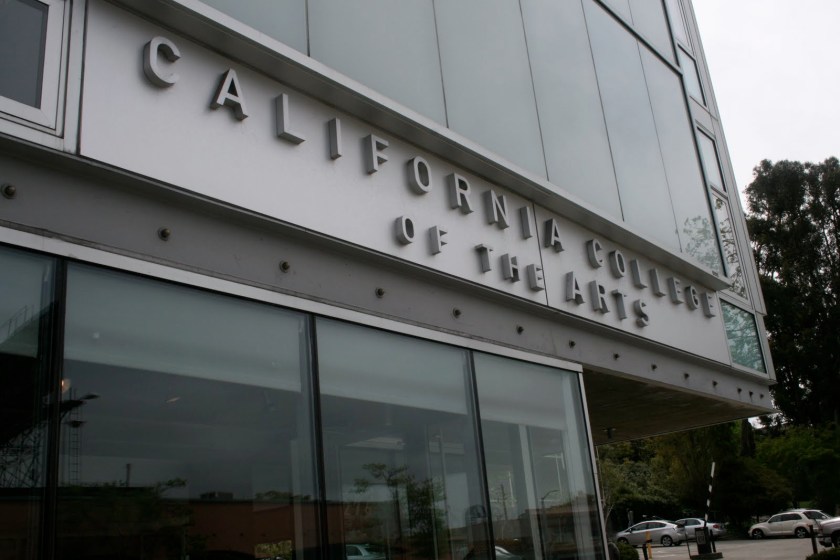
Photo source: Daniel Gonzalez blog
Apply here for Associate Provost for Faculty and Academic Partnerships, or go to:
https://cca.wd5.myworkdayjobs.com/en-US/CCA/job/Oakland/Associate-Provost_R502291-1
Photo source: Daniel Gonzalez blog
Apply here for Associate Provost for Faculty and Academic Partnerships, or go to:
https://cca.wd5.myworkdayjobs.com/en-US/CCA/job/Oakland/Associate-Provost_R502291-1
The Department of Art History at the University of Chicago seeks (an) art or architectural historian(s) of the Black Atlantic, specializing in any pertinent historical period and in any territory of Africa, Latin America, the Caribbean, North America, Iberia, and/or the more ramified Atlantic world. We are also interested in art or architectural historians working more broadly on race, (post)colonialism, and visual culture in the Atlantic world. The ability to work across fields and subfields is highly desirable, as we expect the successful candidate to collaborate with faculty within and beyond our department.
The Department of Art History values diversity. A goal of the search is to increase the diversity of the faculty in the Department of Art History and across the Humanities Division, and we therefore welcome applicants from groups historically underrepresented in academia, such as black/African American, Hispanic/Latino, American Indian or Alaskan Native.
Successful candidates will be appointed either as a tenure-track Assistant Professor, or as a Provost Fellow at the rank of Instructor with an initial two-year faculty appointment. This initial period is intended to serve in lieu of a postdoctoral appointment. Provost Fellows will teach one class/year, receive research support, and participate in programming designed to help support them in their transition to Assistant Professor. Provost Fellows will ordinarily be promoted to Assistant Professor at the end of their 2-year term. Candidates for Provost Fellow appointment must have no more than two years of postdoctoral experience. All candidates must have the Ph.D. in hand by the start of the appointment, 1 July 2018.
Complete application materials include cover letter (including discussion of research and teaching interests), CV, two scholarly writing samples, names and contact information for three professional references, and a statement describing the applicant’s prior and potential contributions to diversity in the context of academic research, teaching, and service. Applicants should send all materials in electronic format (MS Word or PDF) to Caroline Altekruse at caltekruse@uchicago.edu with subject heading “Black Atlantic Art and Architecture Search.” In addition, applicants must upload the CV and cover letter to the Academic Career Opportunities website at http://tinyurl.com/ya6e3sek. No applications received after 20 September 2017 will be accepted. University positions are contingent upon budgetary approval.
The University of Chicago is an Affirmative Action/Equal Opportunity/Disabled/Veterans Employer and does not discriminate on the basis of race, color, religion, sex, sexual orientation, gender identity, national or ethnic origin, age, status as an individual with a disability, protected veteran status, genetic information, or other protected classes under the law. For additional information please see the University’s Notice of Nondiscrimination at http://www.uchicago.edu/about/non_discrimination_statement/. Job seekers in need of a reasonable accommodation to complete the application process should call 773-702-0287 or email ACOppAdministrator@uchicago.edu with their request.
Washington University in St. Louis announces the eighteenth year of Modeling Interdisciplinary Inquiry, a postdoctoral fellowship program endowed by the Andrew W. Mellon Foundation, designed to encourage interdisciplinary scholarship and teaching across the humanities and social sciences. We invite applications from recent PhDs, DPhils, or D.F.A.s (in hand by June 30, 2018, and, no earlier than June 30, 2013) for a position as Fellow. In September 2018, the newly selected Fellows will join the University’s ongoing interdisciplinary programs and seminars. The Fellows will receive a two-year appointment with a nine-month academic year salary beginning at $54,150 per year. Postdoctoral Fellows pursue their own continuing research in association with a senior faculty mentor at WU. During the two years of their tenure, they will teach three undergraduate courses and collaborate in leading an interdisciplinary seminar on theory and methods for advanced undergraduates and beginning graduate students in the humanities and interpretive social sciences.
Applicants should submit, through Interfolio, a cover letter, a description of their research program (no more than 1800 words and accessible to reviewers in other fields), a brief proposal for an interdisciplinary seminar in theory and methods, and a curriculum vitae. Applicants who have not completed their doctoral work should indicate, in their cover letter, how many chapters of their dissertation are complete and how complete the remaining chapters are. Applicants should arrange for the submission of three confidential letters of recommendation, also via Interfolio. Further information on Modeling Interdisciplinary Inquiry is available on the web at http://mii.wustl.edu/. Please email us at mii@wustl.edu with additional questions.
Submit materials to Interfolio at the following link by December 4, 2017: apply.interfolio.com/42295 (Portal opens September 1, 2017.)
Washington University in St. Louis is committed to the principles and practices of equal employment opportunity and affirmative action. It is the University’s policy to recruit, hire, train, and promote persons in all job titles without regard to race, color, age, religion, gender, sexual orientation, gender identity or expression, national origin, veteran status, disability, or genetic information.
The protection and promotion of human rights has gained greater significance and urgency with the crisis of African migration, and other forced and semi-forced migrations from Western Asia and Eastern Europe. As these individuals and groups have sought refuge and equitable and humane social participation within European societies, they have challenged conceptualizations of the state and citizenship formation, and continue to force new articulations and notions of “home” and belonging. These current migratory flows are newer iterations of a long relationship between Europe and Africa, and between Europe and the African Diaspora that spans centuries.
ASWAD invites panel and individual paper proposal submissions for its 9th biennial conference to be held in Seville, Spain, November 7 to 11, 2017 on the campus of Pablo de Olavide University to discuss, examine, and reflect on the critical nature of the interactions and transformations that African descendants experience in their diaspora, particularly within a European context. As an interdisciplinary organization, ASWAD invites presentations that illuminate the lives of Africans and African descendants from scholars of any discipline, including social sciences, physical sciences, life sciences and performing arts. We aim to collaborate with activist and intellectual communities around sustained dialogue involving diaspora, race and citizenship, and historical and contemporary patterns of racial formation.
In addition to academics, ASWAD welcomes artists, activists, journalists, and independent scholars with specific interests in the African Diaspora. We are especially keen to create a platform for Black European Groups and NGOs.
e. Religion, Power, and Praxis in the African Diaspora
The 2015 inaugural exhibition of the new Whitney Museum of American Art, America Is Hard to See, charted a largely unconventional history of modern American art built around issues that have galvanized United States artists, pressing them into often uncomfortable relationships with challenging political and social contexts, including the history of slavery, labor unrest and the Vietnam War–and effectively underscoring the point that American is hard to see.
In recent years, scores of museum exhibitions, books and catalogues have worked to reimagine the field among these lines, telling the history of United States art in all of its multilayered, messy complexity. It is not common to find major shows of previously suppressed African-American and Latinx artists as well as scholarly studies of forgotten women and LGBTQ artists. Yet in an era of unprecedented economic inequality, Black Lives Matter, the rise of the alternative right, and anti-immigration reform, there remains much to be done.
This panel seeks to address where American art history from colonial times to the present sits in our twenty-first century classrooms, galleries, museums, blogs and journals–and, more importantly, what directions we might pursue for its future growth. We welcome papers representing all historical periods in American art as well as new avenues of research and methodological inquiry.
Please send a one-page abstract and short c.v. by March 15, 2017, to sessions@ahaaonline.org
AHAA seeks to included new voices, and we encourage younger scholars to make submissions. Chairs and panelists of AHAA-sponsored sessions must be current members of AHAA and CAA.
Requisition Number: 102021
Division / Dept.: IT and Digital Scholarship / Black Metropolis Research Consortium
Reports to: Associate University Librarian for IT and Digital Scholarship
Work Schedule: 37.5 hours per week; Monday-Friday, 8:30 a.m. to 5:00 p.m.
The Black Metropolis Research Consortium is a Chicago-based membership association of libraries, universities, and other archival institutions with a mission to make broadly accessible its members’ holdings that document African American and African diasporic culture, history, and politics, with a special focus on Chicago. The consortium also advocates for the preservation, enhancement, growth, and use of these materials, and the diversity of the information professionals who care for them.
The Executive Director of the Black Metropolis Research Consortium (BMRC) provides strategic leadership and operational management for the BMRC’s activities.
In partnership with the BMRC Board of Directors, the Executive Director sets strategic goals and pursues funding opportunities to support BMRC initiatives. The Executive Director is responsible for the Consortium’s day-to-day management and operations. The Executive Director serves as the principal spokesperson for the BMRC to raise its profile both locally and nationally in order to develop new partnerships, recruit new members, and spread awareness of BMRC activities and programs. The Executive Director works closely with the Board on consortium policies, protocols, governance, grant applications, and especially fundraising initiatives. The Executive Director also manages the relationships with current members to ensure their needs are met and their interests are represented.
This position reports to the Associate University Librarian for Information Technology and Digital Scholarship at the University of Chicago, which acts as the BMRC’s host institution and fiscal agent. The position oversees BMRC staff and works with directors, administrators, and faculty at member institutions to manage collaborative projects, internship programs, and the summer fellows program.
Leadership and Planning:
Program Management:
Communication:
Other duties as required.
To apply for this position submit your profile and required materials to https://jobopportunities.uchicago.edu. Resumes sent via mail, fax, or email will not be considered.
All qualified applicants will receive consideration for employment without regard to race, color, religion, sex, sexual orientation, gender identity, national origin, age, protected veteran status, or status as an individual with disability.
The University of Chicago is an Affirmative Action / Equal Opportunity / Disabled / Veterans Employer.
Job seekers in need of a reasonable accommodation to complete the application process may contact Human Resources by calling 773-834-1841 or by emailing recruitment@uchicago.edu with their request.
Casa de las Américas (Havana, Cuba) will be the site for a meeting (Oct. 16-20, 2017) focused on the theme “Socialization of Latinos in the United States: Education, Religion and Mass Media.”
The meeting intends to produce a thorough debate regarding the socialization processes that influence the relationships between migrants and their children in American society.
Participants will reflect on the perspectives Latinos in the United States as social subjects immersed in new socialization spaces that create formal educational processes that constitute breakpoints in the establishment of American society while being at the same time participants of informal processes that are substantiated by other socializing agents such as religions and their institutions; and the media and social networks on the Internet. Music and sports are areas that we also want to highlight in order to make them objects of analysis.
The Colloquium, consistent with the goals of previous meetings, will create a space of action with the presence of people of Latin American and Caribbean origins who are linked to the arts, literature and social sciences and humanities.
The following are proposed as central themes:
In addition, one of the working sessions will be dedicated to discussion of the history of Cuban emigration to the United States, the insertion of Cubans and Cuban Americans in the Latino communities, and the influence of the new scenarios in Cuba-U.S. relations. Furthermore, tribute will be paid to the life and work of the Cuban artist Ana Mendieta.
ABSTRACTS AND PAPERS
Scholars interested in taking part in the Colloquium may submit individual papers or panels. In either case, the following guidelines should be followed:
To facilitate your transfer and stay in Cuba, please contact your travel agent or:
CASA DE LAS AMÉRICAS
3a y G, El Vedado, La Habana, 10 400, Cuba,
Telephone: (537) 838-2706/09, ext. 129. Fax: (537) 834-4554
Emails: latinos@casa.cult.cu; http://www.casadelasamericas.org
Betty Reid Soskin is the granddaughter of Louis Charbonnet (1869-1924), architect and builder of Corpus Christi Church and School in New Orleans. Ms. Soskin has information and memorabilia about her grandfather that she would like to share with reputable researchers of 19th and early 20th-century African American architecture and material culture, and/or Louisiana history and culture.
Initially, a creator of ornamental iron work, Louis Charbonnet became an engineer, inventor and millwright. His New Orleans business establishment dates to 1893. After St. Louis School was destroyed in a 1915 storm, Charbonnet drew plans for its reconstruction and supervised the project.
To learn more, contact Ms. Soskin cbreaux@earthlink.net
Also see Betty Reid Soskin’s blog!

Photo of Louis Charbonnet Sr. at “The Charbonnets” homepage
“Art History as Créolité/Creolising Art History”
Deadline: November 7, 2016
Association of Art Historians (AAH) annual conference
6th – 8th April 2017
Loughborough University, England
As part of the three-day workshop titled ‘Créolité and Creolisation’, which took place on St Lucia as one of the platforms of Documenta 11 (2002), participants explored the genealogy of terms such as ‘creolization’ and ‘Créolité’, and their potential to describe phenomena beyond their historically and geographically specific origins (however slippery they are). Surprisingly, there has been little engagement with the potential of creolisation as a way of doing or writing art histories differently since that time. This session aims to redress this lacuna.
Stuart Hall, one of the workshop participants, writes that what distinguishes creolisation from hybridity or diaspora is that it refers to a process of cultural mixings that are a result of slavery, plantation culture, and colonialism. Yet, Martinican-born poet and theoretician Édouard Glissant notes that creolisation can refer to a broader set of sociocultural processes not only in the Caribbean but also ‘all the world’ (Tout-monde). Drawing on Hall and Glissant, Irit Rogoff suggests that créolité can more broadly reference the construction of a literary or artistic project out of creolising processes.
What would it mean to re-imagine art history as Créolité? That is, hegemonic Western art history has created in its wake an array of ‘other’ art histories connected to regions such as Latin America, the Caribbean, Eastern Europe, and South Asia to name a few. Of special interest in this session is not only considering such regional art histories as relational to each other, but also exploring how other constructions of identity – such as gender, sexuality, race, and class – are intertwined with them. Papers exploring contemporary and historical periods are both welcome; and those critically examining Glissant’s terms – such as ‘opacity’ and ‘globality’ – to bear on the session theme are especially encouraged.
Please email your proposals (max 250 words) for a 25-minute paper to session convenor Alpesh Kantilal Patel (Florida International University, Miami) at alpesh.patel@fiu.edu by November 7.
Also, include a short title, your name, affiliation and email.
Terra Foundation International Research Travel Grants offer US-based scholars working on American art and visual culture prior to 1980 the opportunity to conduct research outside the United States. Grant funding is available for short-term travel for scholars whose research projects require study of materials outside the United States, enabling scholars to:
For more information, go to the Terra Foundation’s website.

