Apply on or before Jan. 15, 2018.
JOB OPPORTUNITY: Assistant Professor of Mural, Painting and Large-Scale Digital Public Practices–CSU-Monterey Bay
Apply on or before Jan. 15, 2018.
Apply on or before Jan. 15, 2018.
2017 WILLIAM H. JOHNSON PRIZE
DEADLINE FOR APPLICATION: THURSDAY, NOVEMBER 16, 2017, 6PM Eastern Time
The William H. Johnson Foundation for the Arts is a nonprofit, tax-exempt organization that seeks to encourage African American artists early in their careers by offering financial grants. The Johnson Foundation awards grants to individuals who work in the following media: painting, photography, sculpture, printmaking, installation and/or new genre.
The William H. Johnson Prize is awarded annually to an early-career African American artist. For our purposes, “early-career” is a flexible term that should be interpreted liberally to include artists who have finished their academic work within twelve years from the year that a prize is awarded. For example, a person who finished their studies in 2005 is eligible to apply in 2017, but not in 2018. Age is not determinative, and artists who have not earned BFAs or MFAs are still eligible so long as they have not been working as a professional artist for more than twelve years.
The 2017 William H. Johnson Prize is $25,000 and the winner will be announced in December 2017.
APPLYING FOR THE 2017 JOHNSON PRIZE
READY TO BEGIN THE APPLICATION?
All applications must be submitted online, and the application must be started and completed in the same online session. Changes cannot be made to an application after it’s been submitted. The 2017 Johnson Prize Application Worksheet is provided as a tool for applicants to use prior to starting the online application, to ensure that applicants have prepared all the materials required for completing and submitting the application.
QUESTIONS?
Take a look at the foundation’s responses to Frequently Asked Questions.
From Phoebe Wolfskill (Indiana Univ.), two new titles:
James Romaine and Phoebe Wolfskill, eds., Beholding Christ and Christianity in African American Art (Pennsylvania State Press, 2017)
https://www.psupress.org/books/titles/978-0-271-07774-1.html
and
Phoebe Wolfskill, Archibald Motley Jr. and Racial Reinvention: The Old Negro in New Negro Art (University of Illinois Press, 2017)
http://go.illinois.edu/f17wolfskill

PRIMARY FUNCTION(S): Oversee, steward, and develop SCMA’s collection of American and European paintings and sculpture made before 1950.
DUTIES AND RESPONSIBILITIES:
Serve as an intellectual authority on, and assume a full range of curatorial responsibilities for, the Museum’s activities related to paintings and sculpture made before 1950. Responsible for the installation, interpretation, documentation, and growth of the collection of paintings and sculpture; proposing and executing temporary exhibitions as well as serving as an in-house curator for traveling exhibitions from other institutions; initiating research on acquisitions, loans, and the permanent collection; fielding public inquiries; representing the department on Museum and College committees.
Work within a team environment, and supervise project-based research assistants and student interns. Promote dialogue, engagement, and collaboration both within the Museum and beyond. Work with SCMA’s senior leadership to cultivate prospective donors, foundations, and related entities to support the activities of the department as well as the growth of the collections.
MINIMUM QUALIFICATIONS:
Education/Experience: Master’s degree in art history or a closely related field plus a minimum of three years of collection-based curatorial experience or an equivalent combination of education/experience; Ph.D. in art history preferred.
Skills: Independent and self-directed, with the ability to take initiative, anticipate actions needed, and to exercise discretion and independent judgment. Excellent interpersonal and organizational skills. Demonstrated ability to be an effective collaborator both within the Museum and the larger College community. Demonstrated ability to communicate effectively to diverse audiences. Proven record of scholarly research and knowledge of the history of European or American paintings and sculpture 1800 to 1950. Demonstrated ability to manage multiple tasks, set priorities, and meet deadlines
Smith College is an EO/AA/Vet/Disability Employer
Apply here.
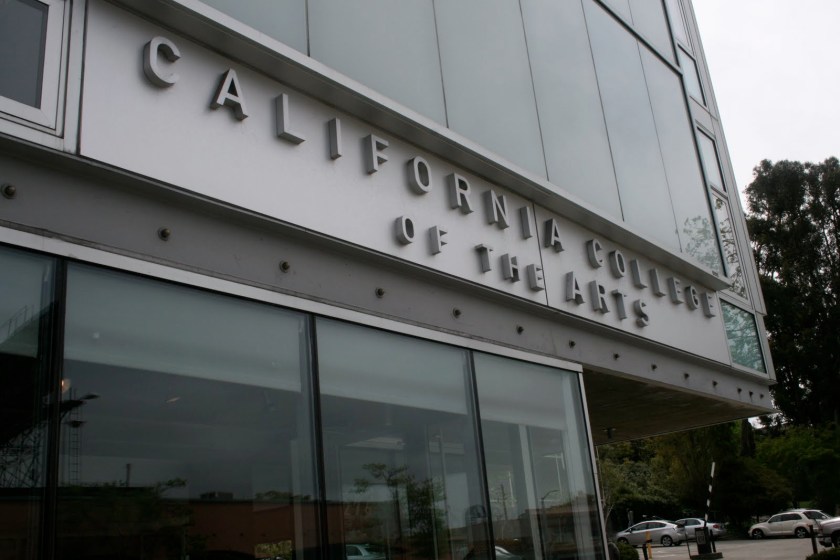
Photo source: Daniel Gonzalez blog
Apply here for Associate Provost for Faculty and Academic Partnerships, or go to:
https://cca.wd5.myworkdayjobs.com/en-US/CCA/job/Oakland/Associate-Provost_R502291-1
Alternative Visions: The Photograph, Self-Representation, and Fact in Contemporary Art of the United States
|
||||
|
||||
Augustus Washington (1820/21-1875) was “the son of a South Asian immigrant” a formally enslaved black Virginian, according to this article published in The Dartmouth Alumni Magazine this spring. Washington studied at Dartmouth, entering with the class of 1847. There, on the Hanover, New Hampshire campus, Washington learned how to make daguerreotypes. Washington and Dempsey R. Fletcher were the only students of African descent at Dartmouth in 1843-44.
Washington’s portrait of John Brown (circa 1846-47) is well-known. Yet there are no confirmed images of Washington himself. Photo historians have been searching and writing about Washington for decades, and the published literature on Washington continues to grow.
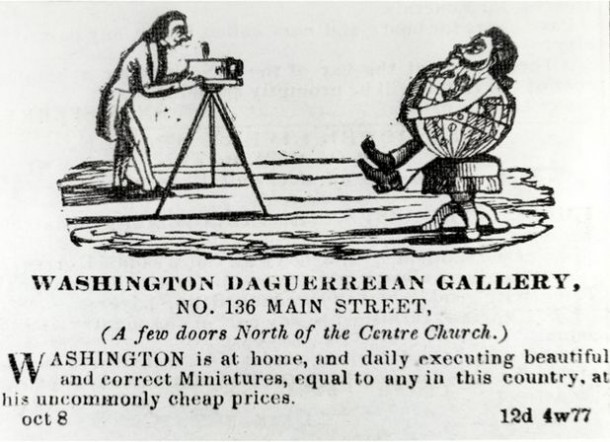
“Advertisement from The Hartford Daily Courant, October 8, 1852. This ad shows the world having its picture taken at Washington’s studio.” – Image, Connecticut Historical Society
Wilson Jeremiah Moses’ Liberian Dreams: Back to Africa Narratives from the 1850s (Penn State University Press, 2010) provides the opportunity to hear Washington’s voice through his written words. Before his migration to Liberia in 1853, Washington wrote this letter to an US newspaper. In Liberia, Washington was a photographer, a sugar cane planter and landowner, and a politician. (Washington’s Dartmouth classmate, Dempsey R. Fletcher, mentioned above, also had lived in Liberia as boy and returned there after studying at Dartmouth.) The African Colonization Movement is a complex subject, and Washington’s images of its key figures helps us think about “what” Africa was and is.
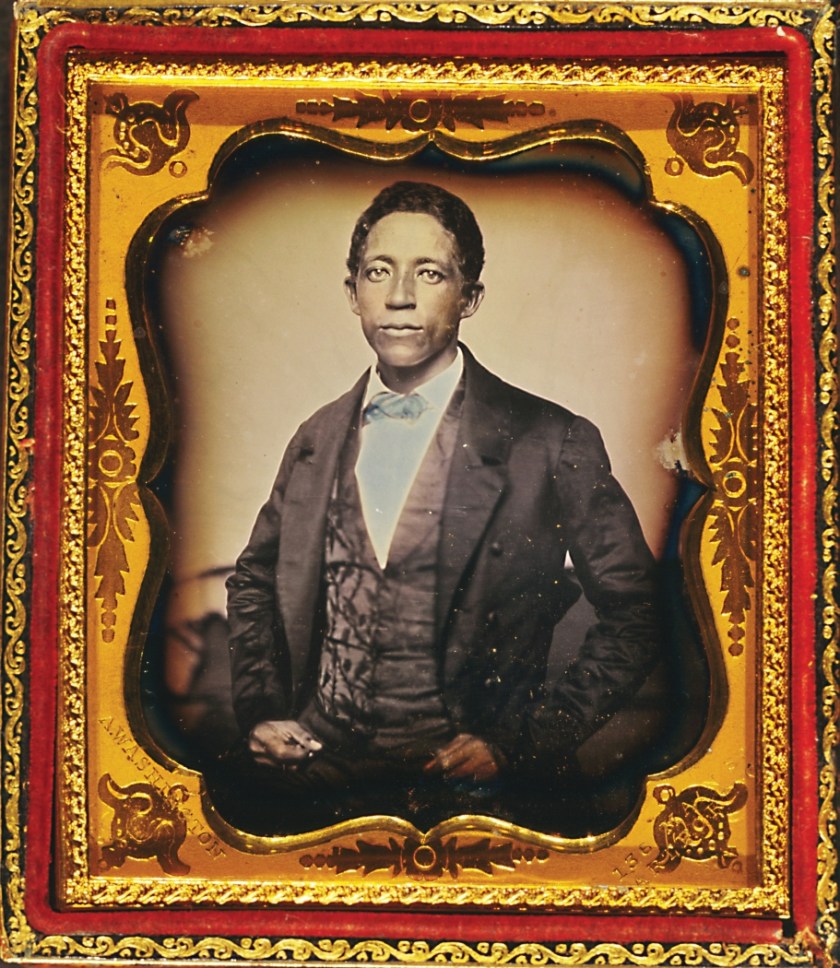
Augustus Washington, Urias Africanus McGill, circa 1854-60. Image: Better Photography website

Cesare Lombroso, “Epileptics,” from L’homme Criminel (Paris, 1887), photo here.
After reading an article in which the ideas of Cesare Lombardo, aka “The Father of Criminology,” were used to shape anti-Italian US immigration policies in the 1920s, I found that the mug shot is back. It’s not just Tiger Woods’. Check out: “Innocent Until Your Mug Shot Is on the Internet.”

Image by Alex Tatusian/The Marshall Project from NY Times, 6/3/2017.
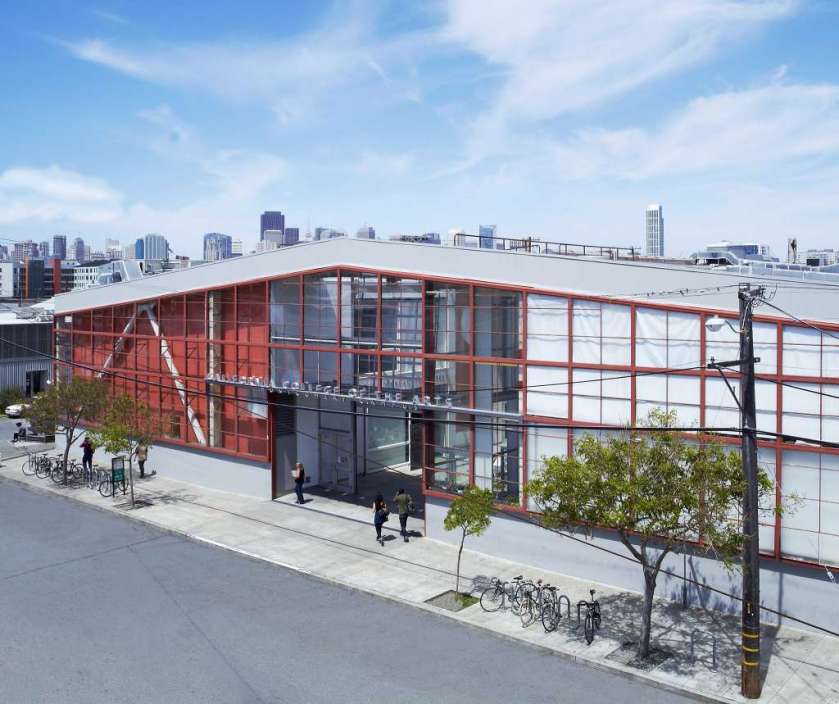

 ACRAH
ACRAH 