PUB: Working Towards a Critical Race Art History

Our new article has been published in kritische berichte.

Abstract:

This essay outlines the foundations and aims of Critical Race Art History, a methodological approach that examines how race operates in art and visual culture. Through case studies of artworks ranging from 18th-century porcelain to contemporary art, the authors reveal how racial hierarchies are naturalized through representation. They argue that race functions as a structuring visual logic and call for a critical reexamination of art history’s disciplinary assumptions.

Check it out here: https://journals.ub.uni-heidelberg.de/index.php/kb/article/view/113082

Jacqueline & Camara

REF: The Romare Bearden Catalogue Raisonné Project

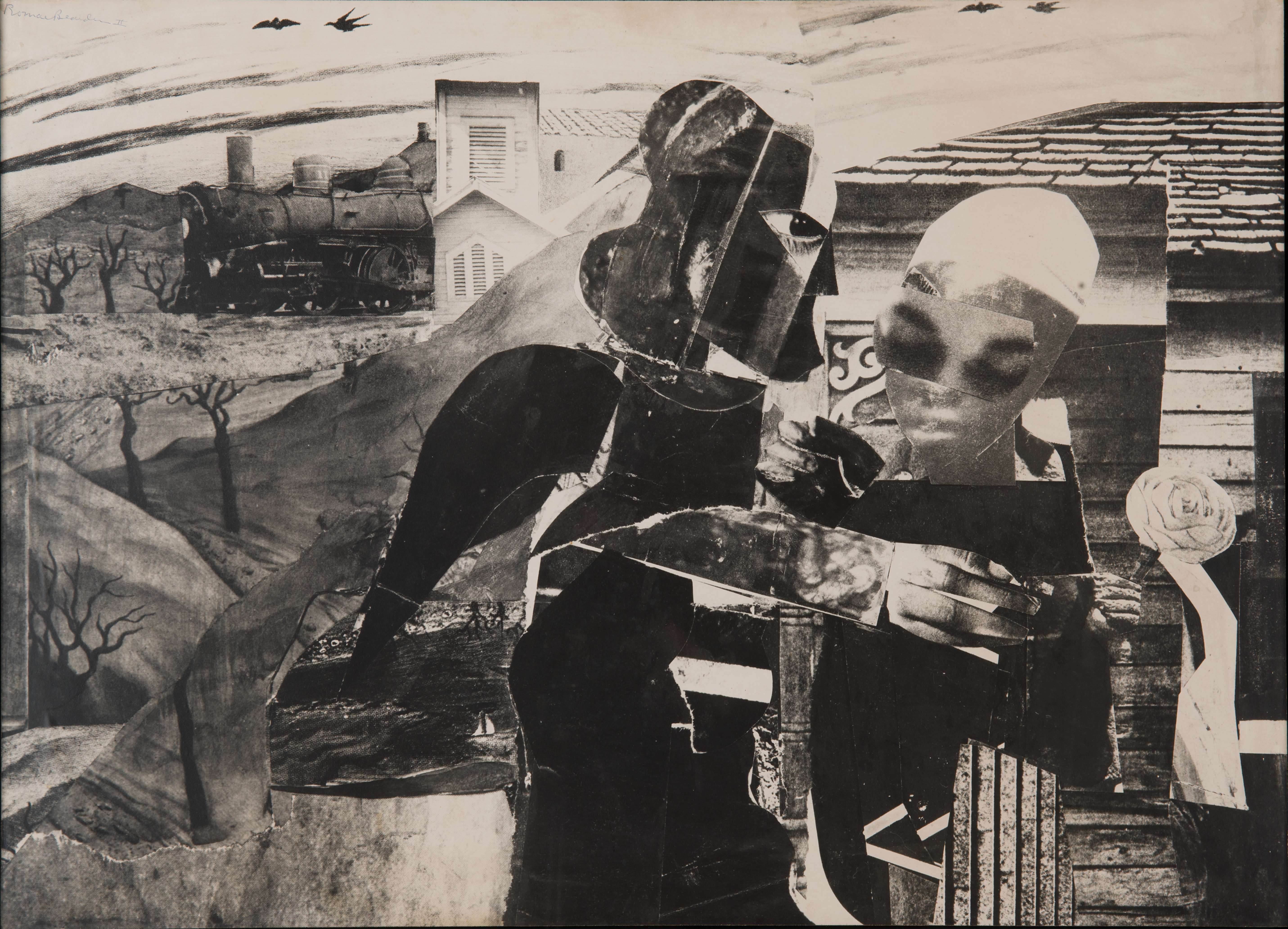
The Wildenstein Plattner Institute is proud to announce the inaugural release of THE ROMARE BEARDEN CATALOGUE RAISONNÉ PROJECT, featuring over 200 of the artist’s unique works created between 1964 and 1969. This significant launch represents a major step forward in the study of one of the 20th century’s most influential African American artists.⁠

Romare Bearden, Prevalence of Ritual: Tidings, 1964, Photostat mounted on fiberboard, 28 3/4 x 39 3/4 inches (73 x 101 cm), Carnegie Museum of Art, Pittsburgh. Photograph © 2025 Carnegie Museum of Art, Pittsburgh © Romare Bearden Foundation / Licensed by VAGA at Artists Rights Society (ARS), NY. RB27TI

Working in partnership with the Romare Bearden Foundation, WPI’s team of researchers led by Dr. Camara Holloway have made incredible strides in identifying elements of the artist’s production: approximately 50 works presented in this first installment were previously unknown within the Foundation’s records. ⁠

The publication of this first installment includes an introductory text by Jacqueline Francis and Anne Monahan, “Romare Bearden, 1964–69: A Turning Point,” which describes Bearden’s artistic transformation — from painter and watercolorist to a nationally-recognized master of collage — as well as pivotal moments earlier in his career: http://bit.ly/4neTiox

We are thrilled to share the initial phase of this project with the larger community, and are looking forward to future installments with continued collaboration with the Romare Bearden Foundation, our technology partner Navigating.art and vital support from the Hasso Plattner Foundation.

Explore the first installment of the digital catalogue here! http://bit.ly/4kRFONU

2024 Eldredge Prize awarded to Megan A. Smetzer

Congratulations to Megan A. Smetzer! The Smithsonian American Art Museum is excited to announce that the 36th Annual Charles C. Eldredge Prize for Distinguished Scholarship in American Art has been awarded to Dr. Smetzer for her book “Painful Beauty: Tlingit Women, Beadwork, and the Art of Resilience” (University of Washington Press, 2021).

The annual Eldredge Prize is presented to the author of a recent book-length publication that enriches our understanding of art history of the United States. The winner is chosen by a jury of three distinguished scholars on the basis of the work’s originality, quality of research and writing, clarity of method, and significance for the field.

This year’s jurors were Karen Mary Davalos of the University of Minnesota, Twin Cities, Amy M. Mooney of Columbia College Chicago, and Laura Kina of the Art School of DePaul University.

In conjunction with the award, Smetzer will present the annual Eldredge Prize Lecture on March 13, 2025. Details and more information will be available online at americanart.si.edu/events.

For more information about the Eldredge Prize, please see the press release: https://americanart.si.edu/press/2024/10/megan-smetzer-awarded-36th-annual-eldredge-prize-painful-beauty-tlingit-women.

Medieval Studies: Definitions, Debates, and the Parameters of the Field

Screen Shot 2019-05-06 at 1.19.03 PM

Image by Mikel Jaso. Published in New York Times, May 5, 2019, here.


Yesterday’s front-page article in the print edition of New York Times bore the headline “Symbols of Past Used by Right Upset Scholars.” That the online version’s header is “Medieval Scholars Joust with White Nationalists. And One Another” is a rhetorical shift worth questioning.

The article’s many directions are equally fascinating:

*the culture of the International Congress on Medieval Studies;

*demographics of the field of European Medievalism;

*narratives of the Anglo-Saxon race—roots, routes, and modernity—in Europe and the US;

*critical theory, feminist critique of power and patriarchy, and decolonizing a field;

*apolitical scholarship as an ideal;

*the Medievalists of Color group;

*white privilege and white fragility;

*Facebook fights and the resource of social media;

*white nationalism and white chauvinism—past and present;

*overhauling the academic conference submission process;

*the Belle da Costa Greene Award (est. 2018) and passing for white.

The Times reporter Jennifer Schuessler runs through these topics differently. She conveys the complexity of terrain in some passages and displays her amusement with the debates in others. “A field increasingly torn by vitriolic spats and racial politics”—anchorage text on the jump page in the print edition—sadly demonstrates the limited way in which Schuessler and the editor who worked with her on this piece see things.

There’s nothing easy about change in twenty-first century academia: it’s well- communicated in the letters accompanying the article—634 of them at present count. They’re worth a look.

This year’s International Congress on Medieval Studies Conference opens in Kalamazoo, Michigan on Thurs., May 9. The next day, May 10, is the anniversary of Greene’s death.


41aa4edab9003f2d3740e0f006de98fb

Belle da Costa Greene. Photo by Clarence White. Published on Pinterest.

Da Costa Greene (born Dec. 13, 1879/1883 in Alexandria Virginia; died May 10, 1950 in New York) was elected of fellow of the Medieval Academy of America in 1939. A librarian at Princeton and later for J. P. Morgan, Greene was the director of the Pierpont Morgan Library from 1924 to 1928.


New resource about artist Maud Sulter (1960-2008)

7315
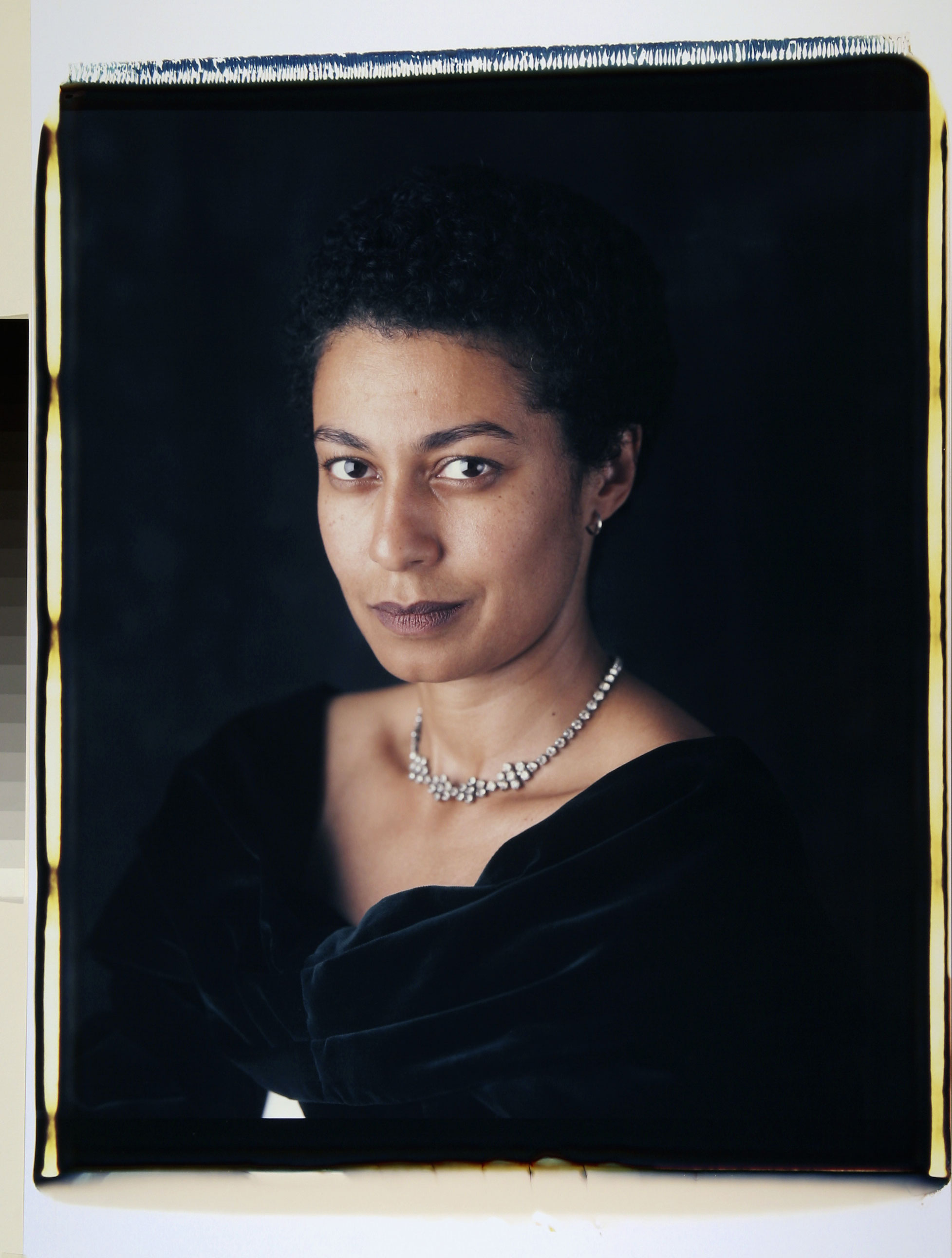
Maud Sulter. Les Bijoux (The Jewels), 2002. Large-format, colour Polaroid photograph. Source here and discussed here.
There is a newly published website about the late, Scottish-Ghanaian artist and writer Maud Sulter:
The publishers of the site make this request:
“Please have a look round the site, there are lots of embedded links leading to more information on Maud’s exhibitions, publications and what’s happened in the past few years.
We need your help in circulating the website.  Please click, like and share the link with everyone who would be interested.”

Memorial Service for Helen Shannon @ University of the Arts

Helen Shannon Memorial-flyer

Panel on “The Chinese and Iron Road” at University of San Francisco, 4/11/2017, 5:00-6:30 pm

BAKER Horace1833 1918 engraver Across the Continent_1878 Frank Leslie Illustrated Newspapers.jpg

Horace Baker (engraver), “Across the Continent—The Frank Leslie Transcontinental Excursion,” published in Frank Leslie’s Illustrated Newspapers, Apr. 27, 1878, page 129, at Online Archives of California.

Caption also reads “Rounding Cape Horn at the head of the great American Canyon with a view of the South Fork of the American River, where gold was first discovered in 1848. Chinese laborers.”


Panelists Sue Lee (Chinese Historical Society of America), Hilton Obenzinger (Stanford University’s Chinese Railroad Worker’s in North America Project), Paulette Liang (a descendant of a Chinese person who worked on the railroad) and James Zarsadiaz (USF) meet to discuss “Reconstructing History, Reconstructing Lives: Chinese Laborers and the Building of the Transcontinental Railroad” at USF’s Gleeson Library tomorrow.

The event is free and open to the public.

Marvel executive says emphasis on diversity may have alienated readers

How many things can be blamed on diversity?

Sian Cain’s article in today’s Guardian makes it clear that Marvel VP of Sales David Gabriel’s reasoning isn’t reasoned. Recently, Gabriel told a gathering that some comic store owners say their customers “have had enough” of new female and ethnic minority characters.

What customers?

Is there a limit to diversity?

Gabriel is not alone in the effort to make diversity appear unprofitable and to present good diversity practices as charitable acts. . .and bad business. Such false beliefs are widespread. Yet, they are counter to research that proves otherwise.

As always, the comments from Guardian readers are worth perusing.  There’re more than 1,000 of them to date. These letters provide great fodder for thinking about the power of representation and the shifts in visual culture.

500

Teaching Tool: Exploration of Appalachian Identity through Photography

I teach art history and art appreciation in the Department of Art and Design at Morehead State University in eastern Kentucky. Most of my students are first-generation college students, and many of them come from the economically-depressed counties within a short driving distance of my institution. Through in-class discussion and office hour chats, I have […]

via Appalachian Identities and Photography as Social Commentary — Art History Teaching Resources

EXH: Muslims in New York @ Museum of the City of New York

Muslims have been woven into the fabric of New York since the city’s origins as New Amsterdam, and the Museum is happy to share highlights from our collection which shed light on this deep history in our current exhibition, Muslim in New York. The size and diversity of New York’s Muslim community has continued to […]

via Muslim in New York: Highlights from the Photography Collection — MCNY Blog: New York Stories