REF: The Romare Bearden Catalogue Raisonné Project

The Wildenstein Plattner Institute is proud to announce the inaugural release of THE ROMARE BEARDEN CATALOGUE RAISONNÉ PROJECT, featuring over 200 of the artist’s unique works created between 1964 and 1969. This significant launch represents a major step forward in the study of one of the 20th century’s most influential African American artists.⁠

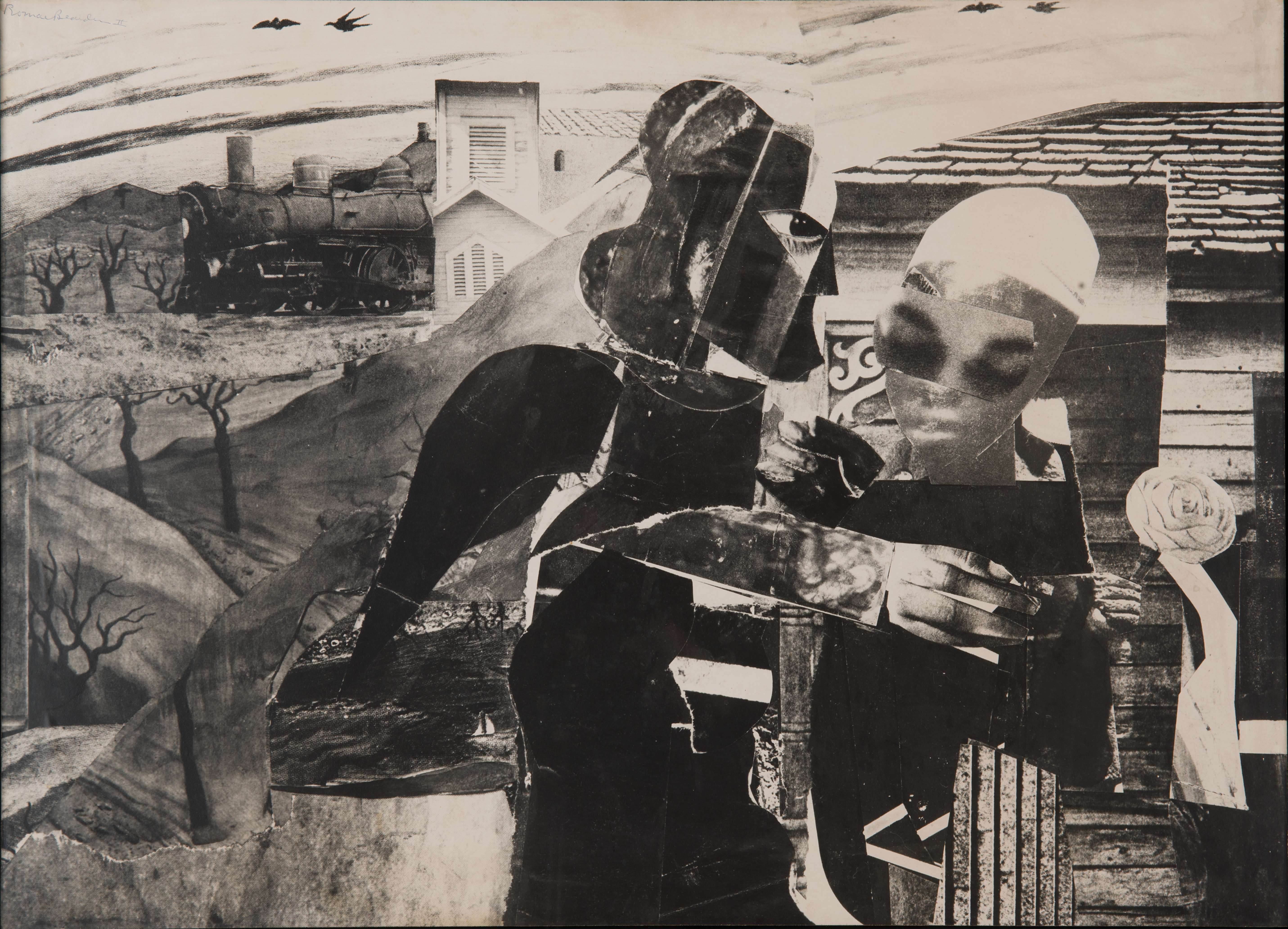
Romare Bearden, Prevalence of Ritual: Tidings, 1964, Photostat mounted on fiberboard, 28 3/4 x 39 3/4 inches (73 x 101 cm), Carnegie Museum of Art, Pittsburgh. Photograph © 2025 Carnegie Museum of Art, Pittsburgh © Romare Bearden Foundation / Licensed by VAGA at Artists Rights Society (ARS), NY. RB27TI

Working in partnership with the Romare Bearden Foundation, WPI’s team of researchers led by Dr. Camara Holloway have made incredible strides in identifying elements of the artist’s production: approximately 50 works presented in this first installment were previously unknown within the Foundation’s records. ⁠

The publication of this first installment includes an introductory text by Jacqueline Francis and Anne Monahan, “Romare Bearden, 1964–69: A Turning Point,” which describes Bearden’s artistic transformation — from painter and watercolorist to a nationally-recognized master of collage — as well as pivotal moments earlier in his career: http://bit.ly/4neTiox

We are thrilled to share the initial phase of this project with the larger community, and are looking forward to future installments with continued collaboration with the Romare Bearden Foundation, our technology partner Navigating.art and vital support from the Hasso Plattner Foundation.

Explore the first installment of the digital catalogue here! http://bit.ly/4kRFONU

FEL: Dedalus Foundation – Senior Fellowship in Art History

Dedalus Foundation – Senior Fellowship in Art History
Accomplished writers and scholars seeking support for critical studies related to 20th-century painting, sculpture, and allied arts may apply for fellowships of up to $30,000. Applicants may not currently be students and must be US citizens.
Deadline: September 15, 2025 | dedalusfoundation.org

CFP: Nineteenth Century Studies Association Awards and Prizes

NCSA Announcement: Submissions Open for Emerging Scholars Award, Article Prize, and BIPOC Scholars Prize
Award Submission Deadline July 1, 2025

Submissions to the Emerging Scholars Award, the Article Prize, and the BIPOC Scholars Award are due July 1, 2025. Winners will each receive a cash award of $500 to be presented at the Annual NCSA Conference in 2026. Short descriptions are below, but please refer to the links to the NCSA website for complete information and lists of recent award recipients. https://ncsaweb.net/grants-funding-awards-prizes/

The Emerging Scholars Award: https://ncsaweb.net/ncsa-emerging-scholars-award/
The work of emerging scholars represents the promise and long-term future of interdisciplinary scholarship in nineteenth century studies. In recognition of the excellent publications of this constituency of emerging scholars, this award is given for an outstanding article or essay published while the author is within their doctoral studies or within six years following conferral of their doctorate. Articles that appeared in print in a journal or edited collection in 2024 or between January 1, 2025 and June 30, 2025 are eligible for the Emerging Scholars Award, which will be presented at the 2026 NCSA Conference. If the official date of publication does not fall within that span but the work in fact appeared between those dates, then it is eligible. NCSA encourages winners to attend the annual conference and will waive the conference registration fee. Entries can be from any discipline and may focus on any aspect of the long nineteenth century (the French Revolution to World War I), must be published in English or be accompanied by an English translation, and must be by a single author. Submission of essays that are interdisciplinary is especially encouraged. Articles may be submitted by the author or the publisher of a journal, anthology, or volume containing independent essays.

More information and link to submit articles are HERE:ncsaweb.net/ncsa-emerging-scholars-award/
Emerging Scholars Award Contact: Dr.Alexandre Bonafos, Chair of the Emerging Scholars Committee atEmergingScholarsNCSA@gmail.com

The Article Prize
The Article Prize recognizes excellence in scholarly studies from any discipline focusing on any aspect of the long nineteenth century (French Revolution to World War I). Entries must be published in English or be accompanied by an English translation, and submission of essays that are interdisciplinary is especially encouraged. Articles that appeared in print in a journal or edited collection in 2024 or between January 1, 2025 and June 30, 2025 are eligible for the 2026 Article Prize, which will be awarded at the 2026 NCSA conference. If the date of publication does not fall within that span but the work in fact appeared between those dates, then it is eligible. NCSA encourages winners to attend the annual conference and will waive the conference registration fee. Articles may be submitted by the author or the publisher of a journal, anthology, or volume containing independent essays.

More information and link to submit articles are here:https://ncsaweb.net/ncsa-article-prize/
Article Prize Contact: Dr. David Ogawa, Chair of the Article Prize Committee at ogawad@union.edu  OR ArticlePrizeNCSA@gmail.com
 

The BIPOC Scholars Prize
The BIPOC Scholars Prize recognizes excellence in scholarly studies from any discipline focusing on any aspect of the long nineteenth century (French Revolution to World War I) completed by a scholar who identifies as BIPOC (Black, Indigenous, or a person of color). Entries can be from any discipline, must be published in English or accompanied by an English translation, and submission of essays that are interdisciplinary is especially encouraged. Articles that appeared in print in a journal or edited collection in 2024 or between January 1, 2025 and June 30, 2025 are eligible for the 2026 BIPOC Scholars Prize, which will be presented at the 2026 NCSA Conference.  If the listed date of publication does not fall within that span,but the work appeared between those dates, then it is eligible. NCSA encourages winners to attend the annual conference and will waive the conference registration fee. Articles may be submitted by the author or the publisher of a journal, anthology, or volume containing independent essays.

More information and link to submit articles are here:https://ncsaweb.net/bipoc-scholars-prize/
BIPOC Scholars Prize Contact: Wendy Castenell and/or Emily August, Co-chairs of the Diversity and Inclusion Committee, atwcastenell@wlu.edu andemily.august@stockton.edu

FEL: Archives Research Fellowship @ Driskell Center

Call for Applications
Archives Research Fellowship Program at The Driskell Center

The David C. Driskell Center at the University of Maryland invites applications for its 2025–2026 Archives Research Fellowship program. Designed to support original scholarship rooted in the Center’s rich archival holdings, the program offers two low-residency fellowships over the academic year. Each fellow will receive a $3,000 stipend, paid in two installments, along with travel and lodging support for a short-term residency of up to three weeks at the Center. We welcome applications from scholars, artists, and cultural workers whose work engages with Black art, art history, and visual culture.

About The Archives

The Driskell Center Archives houses a growing collection of primary source materials across thirteen distinct collections documenting the lives, work, and critical reception of African American artists, scholars, and cultural institutions. Notable holdings include the personal papers of artist and scholar David C. Driskell—featuring six decades of correspondence, lectures, exhibition planning documents, and ephemera—as well as archives from the Weusi Artist Collective, artists Alonzo Davis and robin holder, art historians Tritobia Hayes Benjamin and Michael D. Harris, and arts administrator Terrie Rouse-Rosario. The Center’s archives contain correspondence, photographs, audiovisual materials, press clippings, and ephemera related to the history of Black art. The Center also maintains a non-circulating research library of over 5,000 volumes, including many rare exhibition catalogs. Together with its permanent collection of artworks, these resources support interdisciplinary research in art history, African American studies, visual culture, and museum studies. Applicants are encouraged to consult the Driskell Center’s website for finding aids and additional information, or to contact staff with specific questions about the holdings.
Eligibility
The fellowship is open to scholars, artists, curators, and cultural workers at any career stage, including graduate students (ABD), early-career researchers, and independent scholars. Applicants must demonstrate a clear research interest in African American art and visual culture, with a specific plan for using the archival and/or special collections of The Driskell Center. While the fellowship is open to U.S. and international applicants, travel reimbursement is limited to domestic travel within the United States.

Commitment 

Fellows are expected to complete a short-term research residency at The Driskell Center (up to three weeks) during the 2025–2026 academic year. The timing of the residency will be scheduled in coordination with the Center staff. Fellows will be asked to share their research in a public-facing format, such as a virtual presentation, blog post, or interview. A stipend of $3,000 will be paid in two installments: the first upon commencement of the fellowship on September 2, 2025, and the second upon completion of the residency and submission of a summary report by June 30, 2026.

Required Application Materials
Applicants should submit the following materials as a single PDF to archives-driskellcenter@umd.edu with “Archives Research Fellowship” in the subject line by Monday, June 30, 2025:
Research Proposal (max. 1,000 words) outlining the project’s goals, its relevance to the Driskell Center’s archival holdings, and the intended outcomes.
CV or Resume (max. 3 pages)
Proposed Residency Timeline indicating preferred dates for an on-site visit during the 2025–2026 academic year.
Contact information for one reference (name, title, affiliation, and email). Recommenders will be contacted directly after the application deadline.
Frequently Asked Questions

When will applicants be notified of their selection?
Applicants will be notified of fellowship decisions by July 31, 2025.

When can residencies take place?
Fellowship residencies must be completed during the 2025–2026 academic year (September 2, 2025 -May 8, 2026) . Specific dates will be scheduled in coordination with Center staff based on fellow availability and Center capacity.

Can international scholars apply?
Yes, international applicants are welcome; however, travel support is limited to domestic (U.S.) transportation and lodging expenses.

Is housing provided during the residency?
The fellowship includes funding to support short-term lodging near the University of Maryland, College Park. Fellows will receive assistance from staff in identifying accommodations but are responsible for making their own arrangements.

Do I need to submit a letter of reference with my application?
No. Please include the name, title, affiliation, and email address of one reference. Recommenders for finalists will be contacted directly after the application deadline.

Who can I contact with additional questions?
For inquiries about the fellowship, the application process, or the Driskell Center’s collections, please contact us at archives-driskellcenter@umd.edu with the subject line “Archives Research Fellowship.”
JOB: Curator, African art @ Neuberger Museum

The Neuberger Museum of Art is seeking a Harris Molnar (Rank TBD) Curator of the Arts of Global Africa and the Diaspora to work with traditional objects in the Museum’s collection, and to create contemporary projects that explore the broad ways in which Africa is being thought about today. 

The history of this collection at the Neuberger extends back to the opening of the Museum in 1974 at Purchase College, SUNY. The collection totals approximately 350 objects. The capstone of our current work in the arts of Africa was NEU Conversations: African Art in American Museums, a fall 2024 two-day virtual convening in which speakers shared their work in moderated panels, offering models for how museums can address issues of what constitutes a traditional object, provenance and restitution, engage and collaborate with communities both locally and in Africa, reframe the institutional representation of African art, and bridge the historic past and the creative present. 

The Neuberger seeks scholar who is engaged in these conversations and is familiar with the creation of the best practices guidance being generated by the Arts Council of the African Studies Association. The successful candidate will be able to review the categorization and provenance of objects of the extant collection so that the Neuberger’s display and conceptualization of the arts of Africa is in keeping with the highest and most contemporary standards and methodologies. 

The successful candidate will collaborate with source and descendant communities in their stewardship of the collection, with respect to the traditional arts as well as the contemporary program, to think historically in the present and to diversify and bring forth new narratives, particularly from Black communities. As an academic museum, the Neuberger is a space that supports consideration of the understanding, activation, and explication of the complex histories that can arise from work with arts of Africa and the legacy of Eurocentric colonialism and coloniality in museums. 

Primary responsibilities 
• Organize exhibitions in the area of the Arts of Global Africa and the Diaspora including loan exhibitions and exhibitions of works from the Museum’s permanent collection 
• Assess and research on the permanent collection of the Arts of Global Africa and the Diaspora (also add in note about restitution) 
• Publish researched scholarly publications associated with these projects. 
• Organize symposia in conjunction with these projects. 
• Work with leading artists from the Arts of Global Africa. Organize residencies and encourage the participation of Purchase College students in the making of new on-site works and activities.
• Coordinate the touring of exhibitions. 
• Cultivate a national and international network, engaging actively with scholars, institutions and museums working in the field of the Arts of Global Africa and the Diaspora 
• Participate in the academic life of the College and promote connections between the Museum and the rest of the College. 

Secondary responsibilities 
• Supervise and co-organize exhibitions by students and guest curators. 
• Collaborate closely with Purchase College’s Global Black Studies department 
• Offer special tours of exhibitions to students to match the content of specific courses. 
• Stand on departmental committees and search committees. 

Requirements 
• M.A. in a relevant discipline, such as Anthropology or Art History; Ph.D. or equivalent experience preferred; 
• Expertise in African material culture; 
• 7+ years of progressively relevant experience, preferably in a museum setting 
• Demonstrates a commitment to diversity and inclusion; 
• Track record of engagement with African communities; 
• Demonstrated writing, public speaking, research, and organizational skills; 
• Ability to travel as needed. 

To apply visit: https://jobs.purchase.edu/

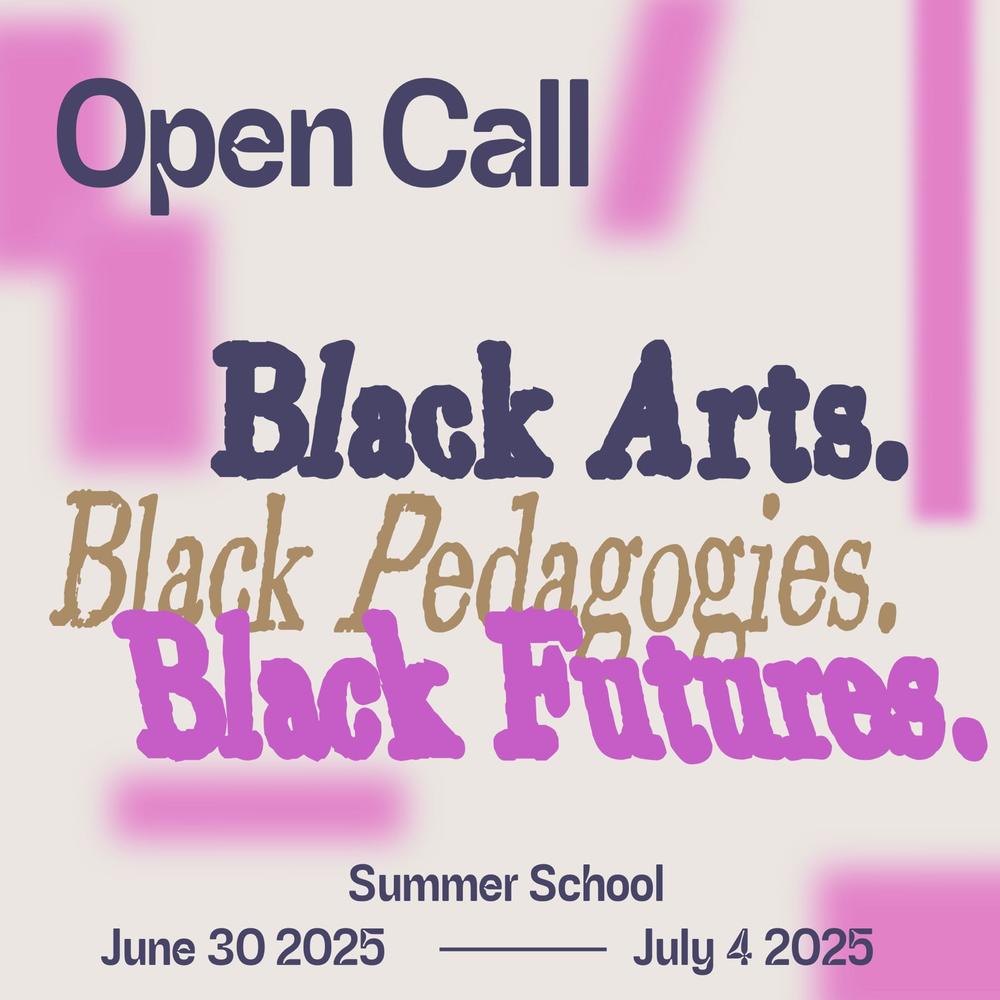
CONF: Black Arts. Black Pedagogies. Black Futures. in Amsterdam–June 30-July 4, 2025

Black Arts. Black Pedagogies. Black Futures. is a five-day dialogic, performative, and pedagogical program that resonates with the imaginative and self-determined artistic, pedagogical, and knowledge practices of the Black Diaspora in Europe and the United States. This program brings together Black artists, educators, thinkers, and cultural workers to facilitate artistic dialogue, foster collective (un)learning, and share methodologies.

Black Arts. Black Pedagogies. Black Futures. is an open and evolving program that amplifies the imaginative production of Black artistic communities. Running from June 30 to July 4, 2025, in Amsterdam, it inaugurates an annual creative, artistic learning environment—an experimental space for dialogue, exchange, and collective imagination.

Learn more here. The deadline to apply is April 1st.

To Attend: James A. Porter Colloquium – Register Now

The 35th Annual James A. Porter Colloquium

on African American Art and Art of the African Diaspora

Dates: April 3-5, 2025

Locations:

  • April 3, 2025- The Driskell Center at the University of Maryland, College Park (In-Person)
  • April 4, 2025- The Smithsonian American Art Museum, Washington DC(In-Person and Live-streamed on Smithsonian American Art Museum’s Youtube page)
  • April 5, 2025- National Gallery of Art, Washington,DC (In-Person Only and Live-streamed on National Gallery of Art’s Youtube page) & Howard University, Washington DC(In-Person Only and Live-streamed on the Porter Colloquium Youtube page)

Colloquium Theme Synopsis:

The Shape of Race

In partnership with the Driskell Center at the University of Maryland, College Park, the Association of Critical Race Art History, the Smithsonian American Art Museum, the Howard University Gallery of Art and the National Gallery of Art, the Department of Art in Howard University’s Chadwick A. Boseman College of Fine Arts invites the public to convene to examine new developments in the area of critical race art history.

Register for Driskell Center events on Thursday, April 3, 2024 by clicking the links below:

4:00PM Deity of the Circle Performance

6:00PM Distinguished Lecture by Dr. Kellie Jones

All additional registration can be completed through this eventbrite page.

Call for fellows: Käte Hamburger Kolleg | Centre for Advanced Study inherit. heritage in transformation, Humboldt-Universität zu Berlin, Germany

The Centre for Advanced Study inherit. heritage in transformation, a BMBF-funded Käte Hamburger Kolleg based at Humboldt-Universität zu Berlin, is pleased to invite applications for its fellowship program, which will run from 1 October 2026 to 31 July 2027. This opportunity is open to both experienced and early-career postdoctoral researchers, as well as artists, filmmakers, and curators. The deadline for submission is 14 April 2025.

The Centre explores historical, contemporary, and potential future transformations in heritage and hosts up to fifteen international fellows each year to pursue their research. The topic for applications for fellowships for 2026-7 is Addressing Heritage Loss. Applications should also relate to one or more of our guiding themes: decentring the west. decentring the human, and transforming value. 

Researchers and topics from areas currently underrepresented in heritage scholarship, including the global South and Eastern Europe, are especially encouraged to apply. 

For more information about the call, see https://inherit.hu-berlin.de/open-call

Save the Date: 2025 James A. Porter Colloquium

JOB: Asst Prof, Art History @ Rocky Mountain College of Art + Design

Assistant Professor of Liberal Arts | Art History  
Location: Lakewood, CO 
Salary: $60,000 – $65, 000  
Application Deadline: Open until filled, review of complete application will begin March 15, 2025 
 
https://www.rmcad.edu/get-to-know-us/careers/

Rocky Mountain College of Art + Design invites applications for the position of full-time Assistant Professor of Art History. Responsibilities include a full teaching load conducted over 8-week terms and active participation in college service. The curriculum in art history serves RMCAD’s BFA degrees across a range of art and design programs. RMCAD has a comprehensive and strong curriculum in both the Foundations Department as well as the Liberal Arts Department. Other responsibilities include supporting the student-centered paradigm, curriculum revision and development, and working collaboratively across the college in support of the institution’s mission and values. 

RMCAD requires a minimum of 15 credit hours or five courses in Art History for every BFA degree program. Courses include: Art History I – Methods and Theories in Art History, Art History II – Global Prehistory-c.1300, Art History III: Global c.1300-c.1980, Seminar on Contemporary Art, Topics in the History Art, and major-specific Art History surveys.  

RMCAD is committed to promoting academic excellence through rigorous and engaged pedagogical practices. Through our own professional development, as academics and educators, the Liberal Arts department provides the necessary skills for artists to develop as professionals, engaged citizens, and actualized human beings prepared to flourish in a complex global world. Students in Liberal Arts engage in a variety of academic disciplines that emphasize the skills necessary for informed, meaningful, and effective writing and the capacity to think critically about their lives, their work, and the larger world. 

Required Qualifications:

  • Graduate Degree in Art History or in a related field.
  • University level teaching experience. 
  • Must reside in the greater Denver area or be willing to relocate.

Preferred Qualifications:

  • PhD in Art History or in a related field (ABD will be considered) 
  • University-level online/hybrid teaching experience. 
  • Museum and/or art education experience 
  • Evidence of exemplary student engagement and advanced pedagogical strategies
  • Evidence of ongoing scholarship in the field (publications, conference presentations, exhibitions, etc.) 
  • Leadership experience of evidence of high-level university service.

How to Apply: 

 Please submit the following documents in your application by March 15, 2025. The applicant may be asked to provide additional materials during the interview process. Incomplete applications will not be considered.

  • CV
  • Cover Letter
  • 3 professional references or letters of recommendation
  • A Diversity Statement 
  • Unofficial Transcripts

About RMCAD: 

Rocky Mountain College of Art + Design (RMCAD) is an innovative, rigorous, and community-oriented global learning environment that inspires passion for critical thinking and prepares learners to be forces of change in the creative industries, our communities, and the world. RMCAD was established in 1963 by Philip J. Steele, who had a vision to provide students with a quality higher education in art and design. RMCAD continues to experience growth since its comparatively modest beginnings and now thrives on a lush, historic campus including more than 23 acres of land and 16 buildings. 

In 2013, RMCAD celebrated its 50th anniversary as a diverse community of people inspired by creative possibilities in higher education. Today, we offer a rich and diverse selection of regionally accredited degrees at the BFA level. We are also pioneers in the online learning environment for art and design. RMCAD currently has over 1,000 students enrolled. 

RMCAD is dedicated to living its mission and values, specifically that “Our students come first.” The college continuously works with faculty and staff towards developing an evolving student-ready paradigm. RMCAD is dedicated to diversity and inclusion and maintains a policy of inclusiveness that recognizes values, and reflects the diversity of the community it serves. The college fosters a dynamic learning and working environment that encourages multiple perspectives and the free exchange of ideas. Diversity encompasses multiple dimensions, including but not limited to: race, culture, nationality, ethnicity, religion, ideas, beliefs, geographic origin, class, sexual orientation, gender, gender identity and expression, disability, and age. Rocky Mountain College of Art + Design continually strives to build an inclusive and welcoming community of individuals with diverse vision, talents, and skills. We welcome people from a multitude of backgrounds who are committed to creativity, academic excellence, societal and cultural evolution and betterment, civility, mutual respect, social justice, and the free and open exchange of ideas. Rocky Mountain College of Art + Design commits itself to these tenants of change, growth, and action, which embrace diversity as an integral part of the academic and professional community. 

Rocky Mountain College of Art + Design is accredited by The Higher Learning Commission (HLC) and is an accredited institutional member of National Association of Schools of Art and Design (NASAD). RMCAD’s degree offerings in Art + Design are accredited by the National Association of Schools of Art and Design (NASAD). The on-campus and online Interior Design Program leading to the BFA is accredited by the Council for Interior Design Accreditation (CIDA). The Art Education Program leading to the BFA is approved by the Colorado Commission on Higher Education (CCHE) and the Colorado Department of Education (CDE). 

Our Benefits:

  • Flexible Spending Account (FSA)
  • Medical Insurance
  • Dental Insurance
  • Vision Insurance
  • Basic Life & AD&D
  • Short & Long Term Disability
  • Paid Vacation
  • Paid Sick
  • Paid Holidays (7 Most Observed, Birthday, & December Gift Holidays (determined by President annually)  
  • 401k employer match
  • Tuition Assistance
  • Other Voluntary Benefits Offered