For more info, go to:
Application deadline is Jul. 22, 2015–today!
For more information, please go to:
Associate Director, Center for African and African American Studies, University of Texas at Austin
Thinking of Stuart Hall’s phrase after seeing this story:
Race & Aesthetics: A British Society of Aesthetics Connections Conference ran the 19th and 20th of May, at the Leeds Art Gallery. Fourteen speakers and several dozen more participants gathered to share thoughts on any of the points of intersection between the philosophies of race and aesthetics. Topics ranged from sexual attraction to humour to Brett Bailey’s Exhibit B. In what follows, I’ll try to present short but effective summaries of each of the conference talks.
http://www.aestheticsforbirds.com/2015/06/race-aesthetics-2015-retrospective.html
Job Description Posted at Phillips Oppenheim website:
http://www.phillipsoppenheim.com/current-searches/detroit-institute-arts.html
Revised: April 23, 2015
The Detroit Institute of Arts
Job Description
Job Title: Curatorial Program Coordinator for 30 Americans Exhibition
Division: Curatorial
Reports To: G.M. Center Curator of African
American Art and Manager of Curatorial Affairs
General Summary
The DIA seeks a Curatorial Program Coordinator to serve part-time in the General Motors (G.M.) Center for African American Art. The candidate must have knowledge of contemporary art practice and prevailing scholarship in contemporary African American Art. The G.M. Center for African American Art oversees the DIA’s collection and galleries dedicated to African American Art, as well as related exhibitions.
Under the supervision of the Curator of the GM Center and Manager of Curatorial Affairs, the candidate will assist the Department Head and Curator of the G.M. Center for African American Art with research and the organization and implementation of a scholarly symposium related to the exhibition 30 Americans: Rubell Family Collection, at the DIA from October 17, 2015 to January 18, 2016. The candidate will carry out supervised research; communicate with scholars, collectors, and donors; and provide general administrative support to ensure the successful implementation of the project.
________________________________________________________________________
Essential Functions
Assists the curator of the G.M. Center of African American Art in identifying and engaging local and national scholars with expertise in contemporary African American art
Assists with developing and organizing a scholarly program that will include a symposium, panel discussions, and other exhibition-related programs and events
Conducts research, drafts correspondence, and facilitates necessary paperwork (such as contracts, travel accommodations, itineraries) relating to the programs. Attends and facilitates all events.
Organizes and prepares all hard copy and digital media needed for the program
Performs other duties related to this program, as needed or assigned
______________________________________________________________________
Knowledge, Skills and Abilities to Perform Essential Functions
Familiarity with the art and African American communities of Greater Detroit;
Excellent research, organizational, and oral and written communication skills;
Revised: April 23, 2015
B.A. required; advanced study in African American and contemporary art preferred;
Ability to multi-task in a fast-paced work environment;
Ability to work effectively with volunteers and patrons, and cross-disciplinary staff;
Experience providing administrative support in event planning required;
Knowledge of MS Office suite of programs, including Word, Excel, and PowerPoint required;
Basic knowledge of Photoshop and ability to create (scan and edit) and manage, as well as download/upload, electronic files from email, Cloud-based applications, and other storage devices;
Ability to work with various computer systems and web applications to schedule/expedite meetings, manage contracts and payments, track spending, and develop budgets;
Provide content to the DIA’s Marketing and PR Department for print materials, as well as the museum’s website and various social media outlets;
Ability to work effectively and positively with other professional staff in a highly collaborative environment.
This job description describes the general nature of the duties and requirements of this job. It is not intended to be an exhaustive list or to limit the supervisor’s ability to modify work assignments as appropriate.
Introduction: Raymond Corbey (Tilburg and Leiden Universities) and Wilfried Van Damme (Leiden University) ‘European encounters with ‘primitive art’ during the late nineteenth century’ 12/vDC1
Articles:
Maarten Couttenier (Royal Museum for Central Africa), ‘“One Speaks Softly, Like in a Sacred Place.” Collecting, Studying and Exhibiting Congolese Artefacts as African Art in Belgium (1850–1897)’ 12/MC1
Christian Kaufmann (University of East Anglia), ‘Seeing art in objects from the Pacific around 1900: how field collecting and German armchair anthropology met between 1873 and 1910’ 12/CK1
Susanne Mersmann (Johannes Gutenberg-Universität Mainz), ‘Defining art in instructions for travellers: the agency of the Questionnaire de Sociologie et d’Ethnographie drafted by the Paris Anthropological Society in 1883’ 12/SM1
Raymond Corbey (Tilburg and Leiden Universities) and Frans Karel Weener (Independent), ‘Collecting while Converting: Missionaries and…
View original post 432 more words
Written by PJ Policarpio, Brooklyn-based community engager, educator, and curator
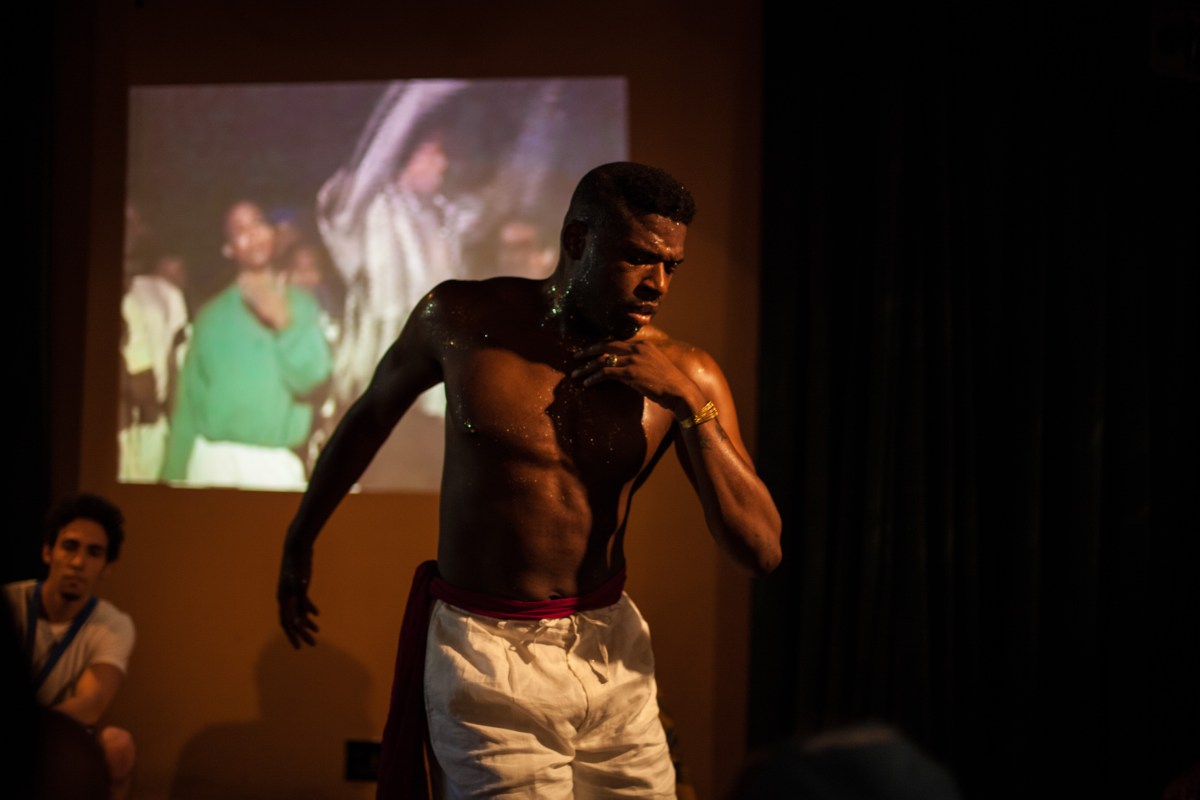
Last summer I was invited by Dixon Place to organize an exhibition of visual art in conjunction with HOT! Festival: NYC’s Celebration of Queer Culture, the world’s pioneering and longest-running LGBTQ Art Festival featuring visual and performance art.
Working with co-curator Beck Feibelman, we organized Visualizing Queerness: 7 Contemporary Artists, bringing together work by seven artists—Ana Benaroya, Zen Browne, Tinker Coalescing, Machine Dazzle, Sara Lautman, André Singleton and King Texas —who sought to represent themselves and their circles with a combination of respect, wit, dignity, defiance, and glamour, defying queer stereotypes and characters. They created beautiful and dynamic images of communities either on or just under the surface, displaying clarity of vision and boldness of expression that are important to the work of making their communities visible and powerful. As they should be.
This year’s exhibition, RALLY: Queer Art and Activism
View original post 442 more words

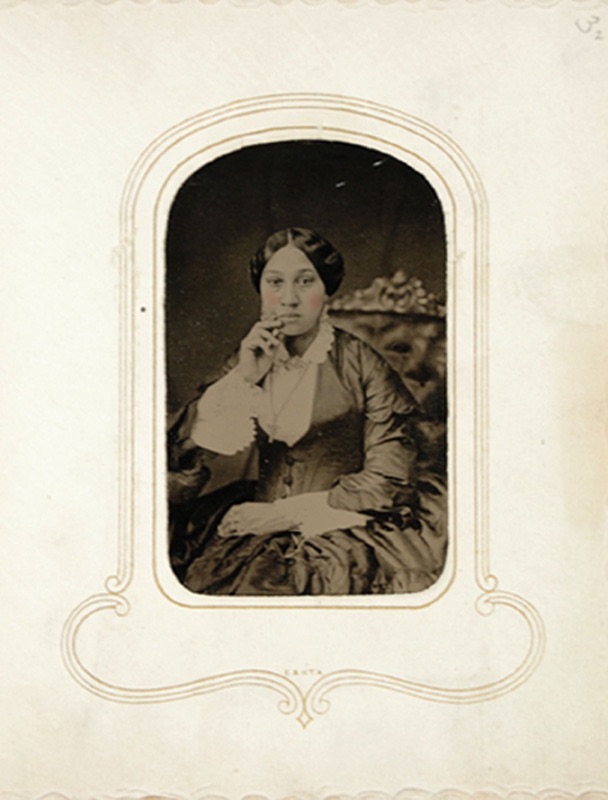
A project out University of Michigan that digitized two 19th-century photo albums owned by an African-American woman named Arabella “Bella” Chapman recently went live:
The Arabella Chapman Project brings together students and scholars of African American history and culture to explore the role of visual culture, especially photography, as a critical dimension of the everyday life and politics of black Americans at the end of the nineteenth century.
View original post 293 more words
In digital francophonie noire:
“The French Revolution Digital Archive emerged from the expressed need by scholars of the French Revolution to gain greater and more flexible access to their sources. The French Revolution itself produced scores of documents by participants, spectators, and critics. These materials include texts of all sorts – legal documents, pamphlet literature, belles lettres, musical compositions, and a rich imagery. Dispersed in libraries and archives, hidden in documental series and in short individual pamphlets, this diverse documentary heritage can now be offered to scholars in a digital format. The French Revolution Digital Archive brings together two foundational sources for research: the Archives parlementaires (hereafter AP) and a vast collection of images selected from the collections of the Bibliothèque nationale de France. Both of these corpora were included in the important “French Revolution Research Collection” produced by the BnF and the Pergamon Press for the bicentennial of the…
View original post 50 more words