REF: The Romare Bearden Catalogue Raisonné Project

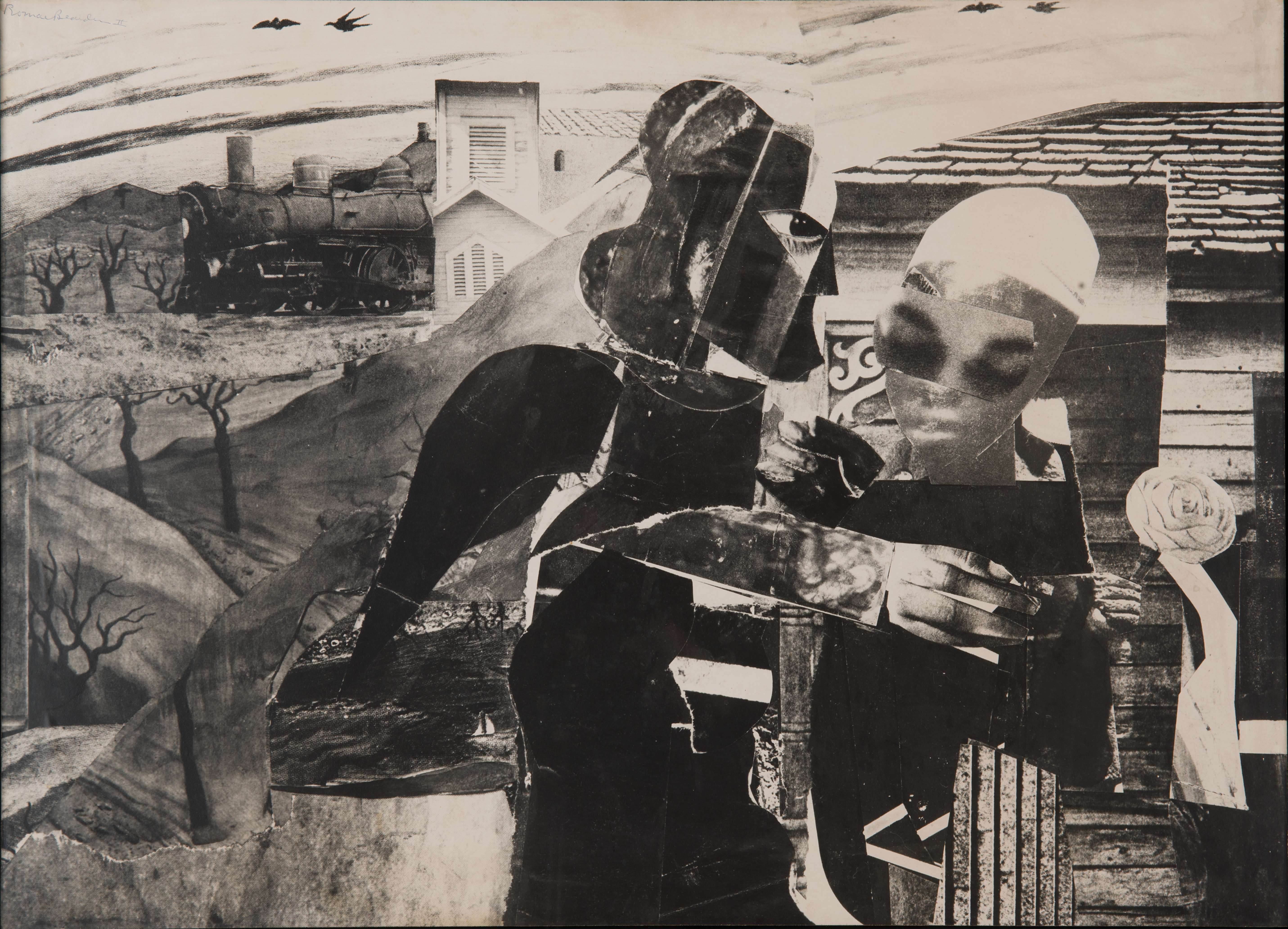
The Wildenstein Plattner Institute is proud to announce the inaugural release of THE ROMARE BEARDEN CATALOGUE RAISONNÉ PROJECT, featuring over 200 of the artist’s unique works created between 1964 and 1969. This significant launch represents a major step forward in the study of one of the 20th century’s most influential African American artists.⁠

Romare Bearden, Prevalence of Ritual: Tidings, 1964, Photostat mounted on fiberboard, 28 3/4 x 39 3/4 inches (73 x 101 cm), Carnegie Museum of Art, Pittsburgh. Photograph © 2025 Carnegie Museum of Art, Pittsburgh © Romare Bearden Foundation / Licensed by VAGA at Artists Rights Society (ARS), NY. RB27TI

Working in partnership with the Romare Bearden Foundation, WPI’s team of researchers led by Dr. Camara Holloway have made incredible strides in identifying elements of the artist’s production: approximately 50 works presented in this first installment were previously unknown within the Foundation’s records. ⁠

The publication of this first installment includes an introductory text by Jacqueline Francis and Anne Monahan, “Romare Bearden, 1964–69: A Turning Point,” which describes Bearden’s artistic transformation — from painter and watercolorist to a nationally-recognized master of collage — as well as pivotal moments earlier in his career: http://bit.ly/4neTiox

We are thrilled to share the initial phase of this project with the larger community, and are looking forward to future installments with continued collaboration with the Romare Bearden Foundation, our technology partner Navigating.art and vital support from the Hasso Plattner Foundation.

Explore the first installment of the digital catalogue here! http://bit.ly/4kRFONU

CFP: Black Collage @ CAA2022

caa.confex.com/caa/2022/webprogrampreliminary/Session9195.html
caa.confex.com/caa/2022/webprogrampreliminary/meeting.html

Black Collage
Session will present: Virtual

Julie L. McGee, University of Delaware
Email Address(s):mcgee@udel.edu

Black Collage, before and beyond Romare Bearden, respects the multivalent nature inherent to Black and Collage. How have and do artists and scholars participate in the un-doing of modernist tropes associated with a history of collage that displaced Black subjectivity and agency? Black collage may adhere to a practice of coller, in reference to the French verb which means to paste or glue, but in ways that don’t inherently bind this practice to European Modernism, Pablo Picasso or Georges Braque. Suppose coller hews more to adhesive than metaphor–that Black collage transcends pieces for compositional uniqueness, a symphony’s manuscript. Black American artists used collage before Bearden, yet there is no denying the centrality of his work to this conversation. Indeed, Bearden’s significance calls us to think deeply about the extended practice and importance of collage and Black artists. Among the many who have are Ralph Ellison, Kobena Mercer, Patricia Hills, James Smalls, Jacqueline Francis, Ruth Fine, and Brent Hayes Edwards. In early 1961, while living in Stockholm, Sam Middleton completed a treatise on collage that placed his own work in a direct line of inheritance from Picasso and Cubism to Surrealism and Dada—for its radical aesthetic refusals and nowness. Appropriating Shahn, Middleton wrote, “Art always has its ingredients of impudence, its rejection of established order so that it may substitute its own fresh and contemporary authority and its own enlightenment.” This session invites contributions related to Black collage, audacity and enlightenment. Considerations of history, theory, conservation, and artistic practice are welcome.