Anything With Nothing: Kemar Black

nationalgalleryofjamaica's avatarNational Gallery of Jamaica

Kemar Black at work on The Creation Kemar Black at work on The Creation

Kingston-based Fashion designer, musician and street artist is one of 10 artists presently featured in the National Gallery of Jamaica’s Anything with Nothing exhibition. Below is a short interview with him, produced with much-appreciated assistance from the African-Caribbean Institute of Jamaica/Jamaica Memory Bank.

An artist and entrepreneur from “up-town and down-town”, Black was associated with Roktowa, an arts initiative based in the old Red Stripe Brewery on West Street. He designs dancehall fashion and writes music and poetry. For the exhibition he has painted four large scale versions of his dancehall fashion drawings entitled The Creation.

Kemar had the following to say: “…Doing artwork from the day my mother shove me out the womb – from me born me ah artist – from day one. Am mostly self-taught but my father is an artist, Winston Black, for years I always see my father…

View original post 167 more words

SMBH Photography Call: ‘The Face of Latin America’. Deadline: Aug. 1, 2014

A Walk in Their Shoes

Progressive Pupil's avatarThe Progress

nl_hispanic25

How dare she? At first glance Korean American artist Nikki S. Lee may come off as a mockery. She explores the subject of identity through photography. In her seminal series titled “Projects,” you see her disguised as a member of a number of American sub-cultures and social identities: senior citizen, Korean school girl, swing dancer, lesbian, exotic dancer, and a skate boarder, amongst many others. Above you see her as a Latina woman. I was slightly offended when I saw her portraying a black woman with corn rows chillin’ wit da homies, or squeezed between her two home girls with a face full of exaggerated makeup. I questioned whether or not she was just posing for fun, or if there was a deeper meaning. To understand her better, I watched a short clip where she, in her native Korean language, talked about her artwork. She talked…

View original post 489 more words

What Will “Minority” Look Like in Late Twenty-First Century North America, UK, and Western Europe??

What Will “Minority” Look Like in Late Twenty-First Century North America, UK, and Western Europe??

In California, those who identify as non-Spanish speaking whites are the state’s ethno-racial minority.  I’ve been thinking about what changes will be necessary to terms such as “minority,” “diversity,” and the like, especially when we write about power, discrimination, anti-racist politics, and the imperative for social justice. Today’s Guardian.com features a report about Britain’s struggle to take on these tasks.

Specific to ACRAH’s focus on the representation of racialization, some questions are especially pressing. What will “minority” look like, signify, and index in the late twenty-first century in North America, the United Kingdom, and Western Europe? In these locales, what images will be summoned and thrown into relief? How will demographic shifts in these regions demand new, sharper analyses of “race” and its histories?

TEACHING: Baucom and DuBois Course Site for “The Black Atlantic”

Jessica Marie Johnson's avatar#ADPhD

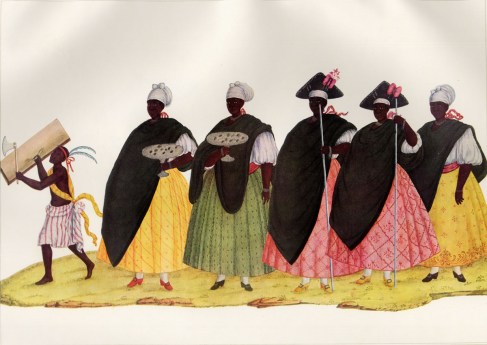
“Festival of Our Lady of the Rosary, Rio de Janeiro, Brazil, ca. 1770s,” from “The Atlantic Slave Trade and Slave Life in the Americas” [Click]

Duke University students are writing the “Black Atlantic” online courtesy of a course taught by Ian Baucom and Laurent DuBois.

From the syllabus:

“This seminar, open to advanced undergraduate students and graduate students in all disciplines, explores the history and literature of what has come to be known as “The Black Atlantic.” Our goal will be to think through the histories of slavery and emancipation in this Atlantic world and the way they have shaped our politics and culture. Our reading will range widely, including works of history and theory as well as poetry and novels. But we will also explore how visual art, music, and various types of performance condense, transmit, and examine this history. Students in the class will be invited to participate…

View original post 104 more words

The Resurgence of Jim Crow

Progressive Pupil's avatarThe Progress

Photo courtesy of NPR.org Photo courtesy of NPR.org

The emergence of Barack Obama as a prominent political figure inspired African American voters in 2008 to turn out in higher numbers than ever before, closing the gaps in voter turnout. The implication is that the racial divide in American has ‘evaporated’ and that we have moved to an America beyond race. This single instance has been the fuel for right wing white ruling class to achieve the goal that they have long been working for: To remove the protective voting rights for African Americans, the same protective measures that culminated in such a successful turnout in 2008.

View original post 491 more words

The Campaign against Skin Bleaching

Progressive Pupil's avatarThe Progress

Courtesy of msxlabs.org Courtesy of msxlabs.org

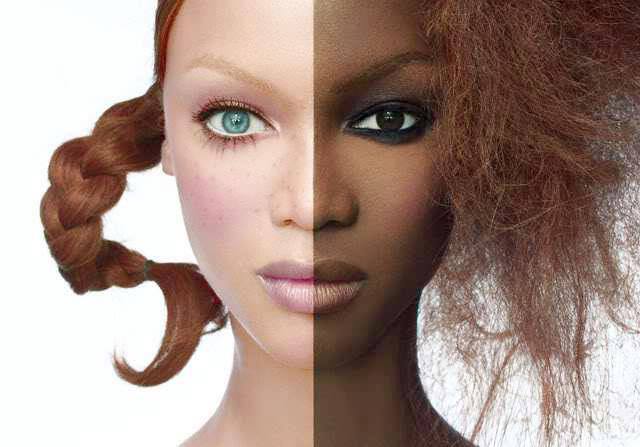
Skin bleaching can be disguised as a beauty fad, but it tells a story much deeper than the shades of these people’s complexions. It is a procedure thought to bring out a beautiful, more attractive visage, but only in exchange for the increased probability of long term health consequences including (but not limited to) skin cancer, chemical poisoning, liver and kidney failure.

View original post 296 more words

DIGITAL/EXHIBIT: “I will be heard!” Abolitionism in America (Cornell U)

Jessica Marie Johnson's avatar#ADPhD

FourTokens

From the introduction:

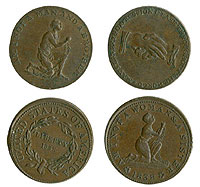
Inspired by conscience and guided by principle, abolitionists took a moral stand against slavery that produced one of America’s greatest victories for democracy. Through decades of strife, and often at the risk of their lives, anti-slavery activists remained steadfast in the face of powerful opposition. Their efforts would ultimately force the issue of slavery to the forefront of national politics, and fuel the split between North and South that would lead the country into civil war.

On display from June 5 through September 27, 2003, “Abolitionism in America” documents our country’s intellectual, moral, and political struggle to achieve freedom for all Americans. Featuring rare books, manuscripts, letters, photographs, and other materials from Cornell’s pre-eminent anti-slavery and Civil War collections, the exhibition explores the complex history of slavery, resistance, and abolition from the 1700s through 1865. The exhibition offers a rare opportunity to view some of Cornell…

View original post 190 more words

AHTR takes on 2014

michellefisher's avatarArt History Teaching Resources

snow_falling_1920x1200

Happy New Year! Welcome, for many of you, to spring semester. We are excited about all that is planned for AHTR in the coming months: new collaborations in teaching content and inquiries, the AHTR website re-design, and the growth of the online community through a great line up of spring blog posts.

We had a huge response to our first Call for Participation for art history survey lesson plan content. Funding from the Kress Foundation supports an initial group of grantees that includes art history instructors from Kingsborough Community College, CUNY; Cornell University; Richard J. Daley College, Chicago; The University of Denver; Montclair State University, New Jersey; Winston-Salem University; University of Washington; and Brooklyn College, CUNY.  Throughout spring semester we will be uploading lectures produced through these grants in the areas of:

Ancient Egypt

Ancient Aegean and Greek

Etruscan and Ancient Rome

Art of the Americas (both pre and…

View original post 988 more words

Religion and Spirituality: Elsewhere in the National Gallery

nationalgalleryofjamaica's avatarNational Gallery of Jamaica

This is the final text panel post regarding the current Explorations II: Religion and Spirituality exhibition.

Our modern Jamaican art galleries will be closed for refurbishing while Religion and Spirituality is on view and several of the works that are normally on view there are included in the present exhibition. However, there are works in our collection that are relevant to the exhibition that were left in their normal location in those permanent galleries that will remain open, mainly because relocating them would have unduly disrupted these displays and, in some instances, because it was not physically possible to relocate the works.

Mallica “Kapo” Reynolds is also well represented in the present exhibition but most, if not all of the other work on view in the Kapo Galleries on the second floor is relevant to the themes of Religion and Spirituality. Kapo’s paintings and sculptures collectively provide a vivid portrait…

View original post 366 more words