Published: June special issue 2015

editorarthistoriography's avatarJournal of Art Historiography

Number 12 June 2015

The European scholarly reception of ‘primitive art’ in the decades around 1900: guest edited by Wilfried Van Damme and Raymond Corbey

Introduction: Raymond Corbey (Tilburg and Leiden Universities) and Wilfried Van Damme (Leiden University) ‘European encounters with ‘primitive art’ during the late nineteenth century’  12/vDC1

Articles:

Maarten Couttenier (Royal Museum for Central Africa), ‘“One Speaks Softly, Like in a Sacred Place.” Collecting, Studying and Exhibiting Congolese Artefacts as African Art in Belgium (1850–1897)’  12/MC1

Christian Kaufmann (University of East Anglia), ‘Seeing art in objects from the Pacific around 1900: how field collecting and German armchair anthropology met between 1873 and 1910’ 12/CK1

Susanne Mersmann (Johannes Gutenberg-Universität Mainz),  ‘Defining art in instructions for travellers: the agency of the Questionnaire de Sociologie et d’Ethnographie drafted by the Paris Anthropological Society in 1883’  12/SM1

Raymond Corbey (Tilburg and Leiden Universities) and Frans Karel Weener (Independent), ‘Collecting while Converting: Missionaries and…

View original post 432 more words

Queer Art and Activism – Open Call to LGBTQ Artists

Mike Murawski's avatarArt Museum Teaching

Written by PJ Policarpio, Brooklyn-based community engager, educator, and curator

Last summer I was invited by Dixon Place to organize an exhibition of visual art in conjunction with HOT! Festival: NYC’s Celebration of Queer Culture, the world’s pioneering and longest-running LGBTQ Art Festival featuring visual and performance art.

Working with co-curator Beck Feibelman, we organized Visualizing Queerness: 7 Contemporary Artists, bringing together work by seven artists—Ana Benaroya, Zen Browne, Tinker Coalescing, Machine Dazzle, Sara Lautman, André Singleton and King Texas —who sought to represent themselves and their circles with a combination of respect, wit, dignity, defiance, and glamour, defying queer stereotypes and characters. They created beautiful and dynamic images of communities either on or just under the surface, displaying clarity of vision and boldness of expression that are important to the work of making their communities visible and powerful. As they should be.

This year’s exhibition, RALLY: Queer Art and Activism

View original post 442 more words

The Arabella Chapman Project

Jessica Marie Johnson's avatarDiaspora Hypertext, the Blog (Archived)

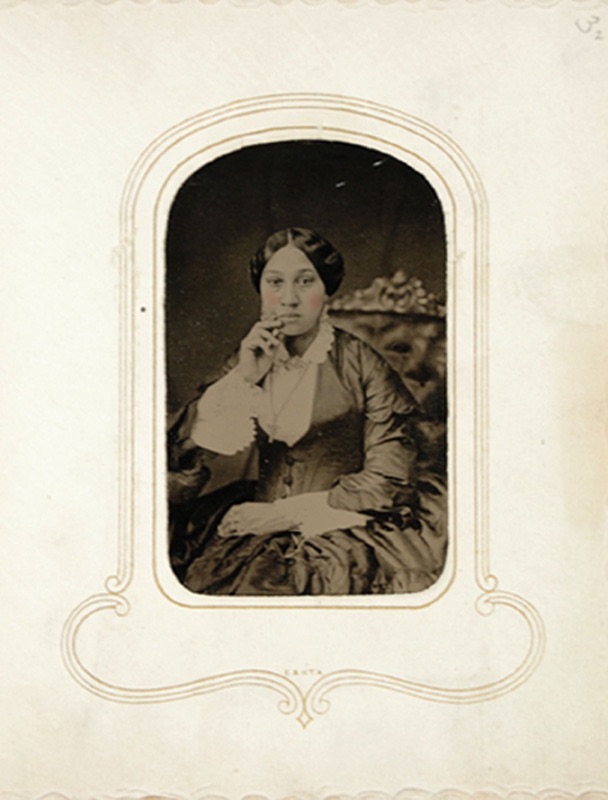
Arabella Chapman, Vol 1, page 13

A project out University of Michigan that digitized two 19th-century photo albums owned by an African-American woman named Arabella “Bella” Chapman recently went live:

The Arabella Chapman Project brings together students and scholars of African American history and culture to explore the role of visual culture, especially photography, as a critical dimension of the everyday life and politics of black Americans at the end of the nineteenth century.

View original post 293 more words

French Revolution Digital Archive

Jessica Marie Johnson's avatarDiaspora Hypertext, the Blog (Archived)

In digital francophonie noire:

“The French Revolution Digital Archive emerged from the expressed need by scholars of the French Revolution to gain greater and more flexible access to their sources. The French Revolution itself produced scores of documents by participants, spectators, and critics. These materials include texts of all sorts – legal documents, pamphlet literature, belles lettres, musical compositions, and a rich imagery. Dispersed in libraries and archives, hidden in documental series and in short individual pamphlets, this diverse documentary heritage can now be offered to scholars in a digital format. The French Revolution Digital Archive brings together two foundational sources for research: the Archives parlementaires (hereafter AP) and a vast collection of images selected from the collections of the Bibliothèque nationale de France. Both of these corpora were included in the important “French Revolution Research Collection” produced by the BnF and the Pergamon Press for the bicentennial of the…

View original post 50 more words

Looking Back – the Jamaica Biennial 2014

nationalgalleryofjamaica's avatarNational Gallery of Jamaica

We are pleased to present this exciting short video documentary which was contributed by Tristan Galand. It reflects on the 2014 Jamaica Biennial, which was in its closing week when the footage was shot, and  focuses on four artists, Camille Chedda, Sheena Rose, Phillip Thomas and Ebony G. Patterson, who present their reflections on the exhibition. With thanks to Tristan Galand and all who helped to facilitate this production, particularly Nicole Smythe-Johnson.

View original post

Can a Documentary Change the World?

Progressive Pupil's avatarThe Progress

AssataCheGif

Black and Cuba director Robin J. Hayes discusses “Socially Engaged Art as a Tool for Social Justice” at UnionDocs Socially Engaged Documentary Art Seminar Sunday June 21, 2015 10:30am 322 Union Avenue, Brooklyn, NY 11211. For filmmakers, artists and cultural producers, the seminar offers vital information about the theory and practice of documentary making with a purpose. Tell them Progressive Pupil sent you and get 20% off conference registration with promocode SEDA15. Learn more at http://www.uniondocs.org/socially-engaged-documentary-art/.  Share with a friend who wants to make films for their communities.

View original post

Final Update: Culture and Resistance: Civil Rights Photography – Memphis 1968

CFP: Art, Race, and Christianity @ CAA 2016

Call for Papers: Art, Race, and Christianity
Affiliated Society: Association for Critical Race Art History
Phoebe Wolfskill, Indiana University, pwolfski@indiana.edu and James Romaine, Nyack College, drjamesromaine@gmail.com
College Art Association Annual Conference, February 3-6, 2016, Washington, DC

Session Description: Since its arrival in the Americas, Christianity has been inextricably linked to issues of racial identity. The religious foundations of the European immigrants who colonized the New World diverged from the practices of indigenous and uprooted African populations, often resulting in a conflict of spiritual identities, a struggle that frequently found its place in artistic expression. This panel seeks papers focusing on the relationship between race and faith in North American and Caribbean art created from the nineteenth century to the present. How does art function as a site in which intersecting racial and religious tensions have been expressed, debated, or potentially resolved? How does an artist (or community of artists) negotiate an identity that is situated between or within racial and religious identities? In what ways does racial identity or racial difference influence depictions of Christian subjects and themes? What specific contexts allowed for or required the negotiation of racial identity and Christian subjects? We welcome broad conceptions of race and a range of media for exploration.

Session participants must be a member of CAA.

Every proposal should include the following five items:
1. Completed session participation proposal form, located at the end of the pdf http://www.collegeart.org/pdf/2016CallforParticipation.pdf or an email with this information.
2. Preliminary abstract of one to two double-spaced, typed pages.
3. Letter explaining speaker’s interest, expertise in the topic, and CAA membership status.
4. CV with home and office mailing addresses, email address, and phone and fax numbers. Include summer address and telephone number, if applicable.
5. Documentation of work when appropriate, especially for sessions in which artists might discuss their own work.

Please send proposals to:
Phoebe Wolfskill, Indiana University, pwolfski@indiana.edu and James Romaine, Nyack College, drjamesromaine@gmail.com

DEADLINE: May 8, 2015

CFP: AFROTOPES @ CAA 2016

*AFROTROPES*

*College Art Association 104th Annual Conference*

*Washington DC, February 3-6, 2016*

Huey Copeland and Krista Thompson, Northwestern University

*Submissions due to h-copeland@northwestern.edu and krista-thompson@northwestern.edu by **May 8, 2015. Visit **http://www.collegeart.org/pdf/2016CallforParticipation.pdf * *for CAA submission guidelines, requirements, and forms*.

This conference session centers on the aesthetic, historical, and theoretical terrain opened up by the “afrotrope.” We coined this neologism as a way of referring to those recurrent visual forms that have emerged within and become central to the formation of African diasporic culture and identity in the modern era, from the slave ship icon produced in 1788 by the Society for Effecting the Abolition of the Slave Trade to the “I *AM* A MAN” signs famously held up by striking Memphis sanitation workers in 1968.

As their rich afterlives make clear, afrotropes resonate widely long after their initial appearance. For instance, the “I *AM* A MAN” sign has served as the basis for a 1988 painting by Glenn Ligon, a sandwich board worn by Sharon Hayes during a 2005 New York street performance, and a poster wielded by protesters in Benghazi during the Arab Spring. Accordingly, our conceptualization of the afrotrope emphasizes how changes to cultural forms over time and space speak to the ways that touchstones of African diasporic history, subjectivity, and modes of resistance are produced and consumed globally by a range of actors for a variety of ends.

By homing in on the material transformation of specific afrotropes over several iterations, we hope to reframe approaches to the ways that modes of cultural exchange come to structure representational possibilities. While our theorization of the afrotrope is indebted to Mikhail Bakhtin’s notion of the chronotope and Henry Louis Gates Jr.’s writing on black figurative turns, we also look toward the work of art historians such as T.J. Clark, George Kubler, and Christopher Wood in elaborating new models for thinking temporality, authorship, and transmission that the afrotrope at once instances and demands.

Indeed, we would argue that the afrotrope makes palpable how modern subjects have appropriated widely available representational means only to undo their formal contours and to break apart their significatory logic. At the same time, the concept enables a fresh consideration of what is repressed or absented within the visual archive. The afrotrope, in other words, offers a vital heuristic through which to understand how visual motifs take on flesh over time and to reckon with that which remains unknown or cast out of the visual field. Ultimately, the aim of our session is not only to identify key afrotropes—with an eye toward producing an edited user’s guide to these forms—but also to theorize how their transmission illuminates the visual technologies of modern cultural formation.

The Dark Room is coming…to Wellesley College on Saturday, April 11

nikkigphd's avatarNikki G Ph.D.

Third Exposure SymposiumTHIRD EXPOSURE~THE DARK ROOM: RACE & VISUAL 3RD ANNUAL SYMPOSIUM on Saturday, April 11 at Wellesley College. Free and Open to the Public. See below for the full schedule.

The Dark Room: Race and Visual Culture Studies Seminar is an extended conversation concerning the intersection of critical race theory and visual culture studies. With over 40 members from 24 North American colleges and universities, we are a group of regional and institutional variety, made up of several different disciplines and departments and different professional ranks. We meet once a month during the academic year to consider the import of recent published works heavily invested in the interstices of visualities rendered through the lens of race and empire. Third Exposure is just that, our third foray into a collective intellectual engagement of this kind. #3rdExp

Email: raceandvisualcultureseminar@gmail.com | Twitter: @raceandvisual

Program Schedule

8:30      Registration    Collins Cinema

9:00     

View original post 598 more words